
A look inside our design process
Each project comes with a unique set of site conditions, goals, and opportunities.
We walk our clients through our tested process to help them easily navigate the process of building their vision.
The Site
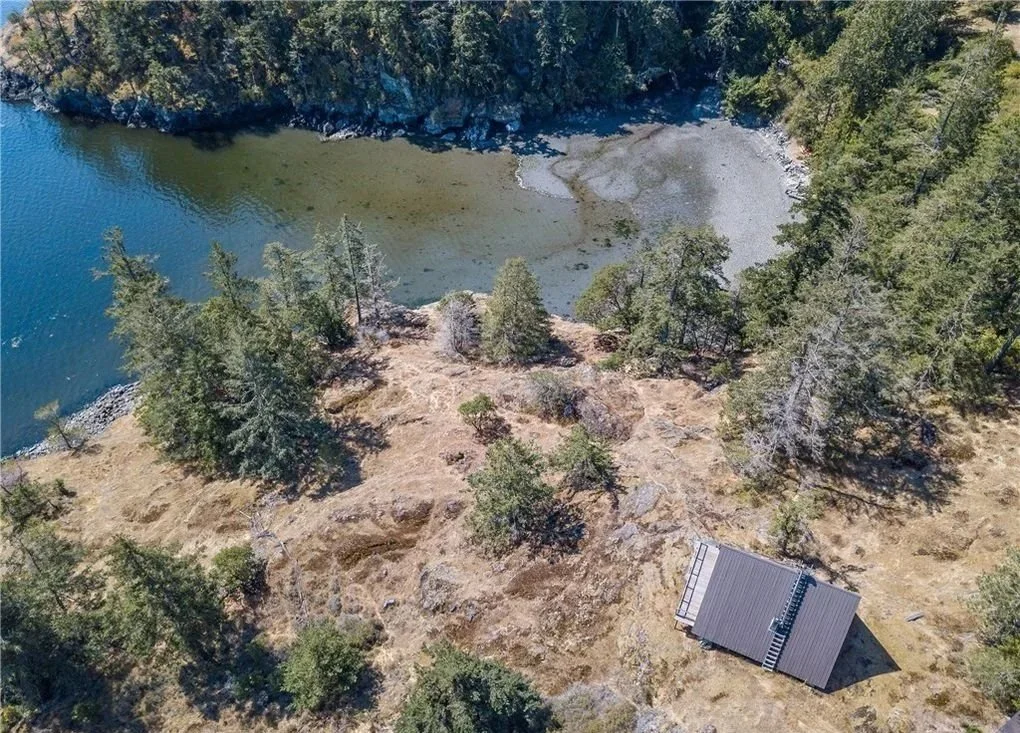
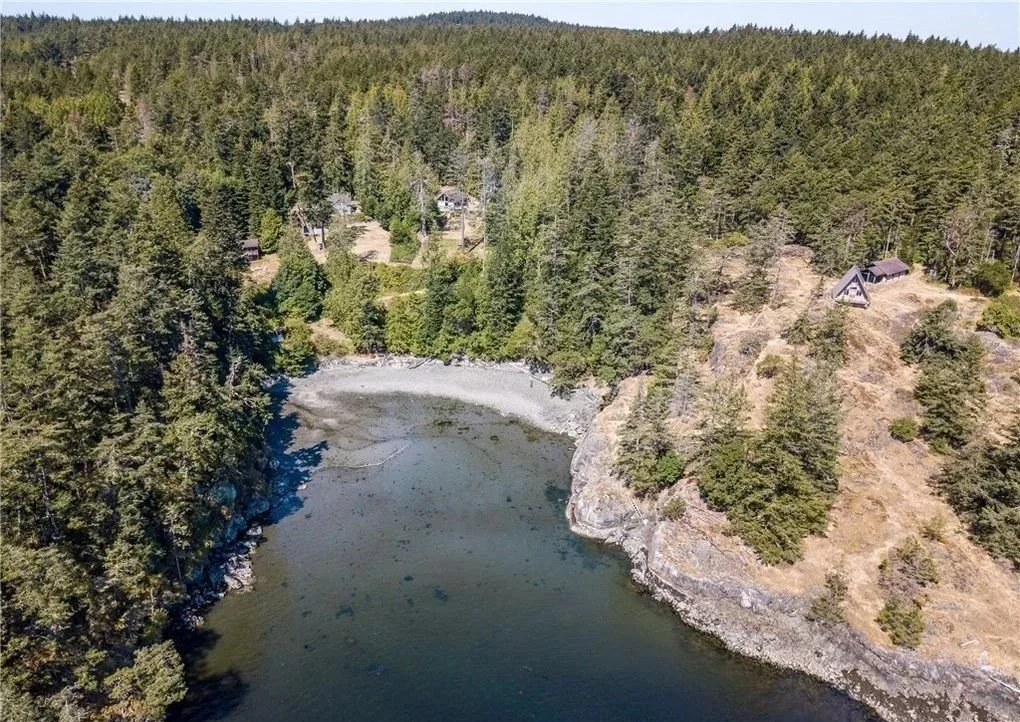
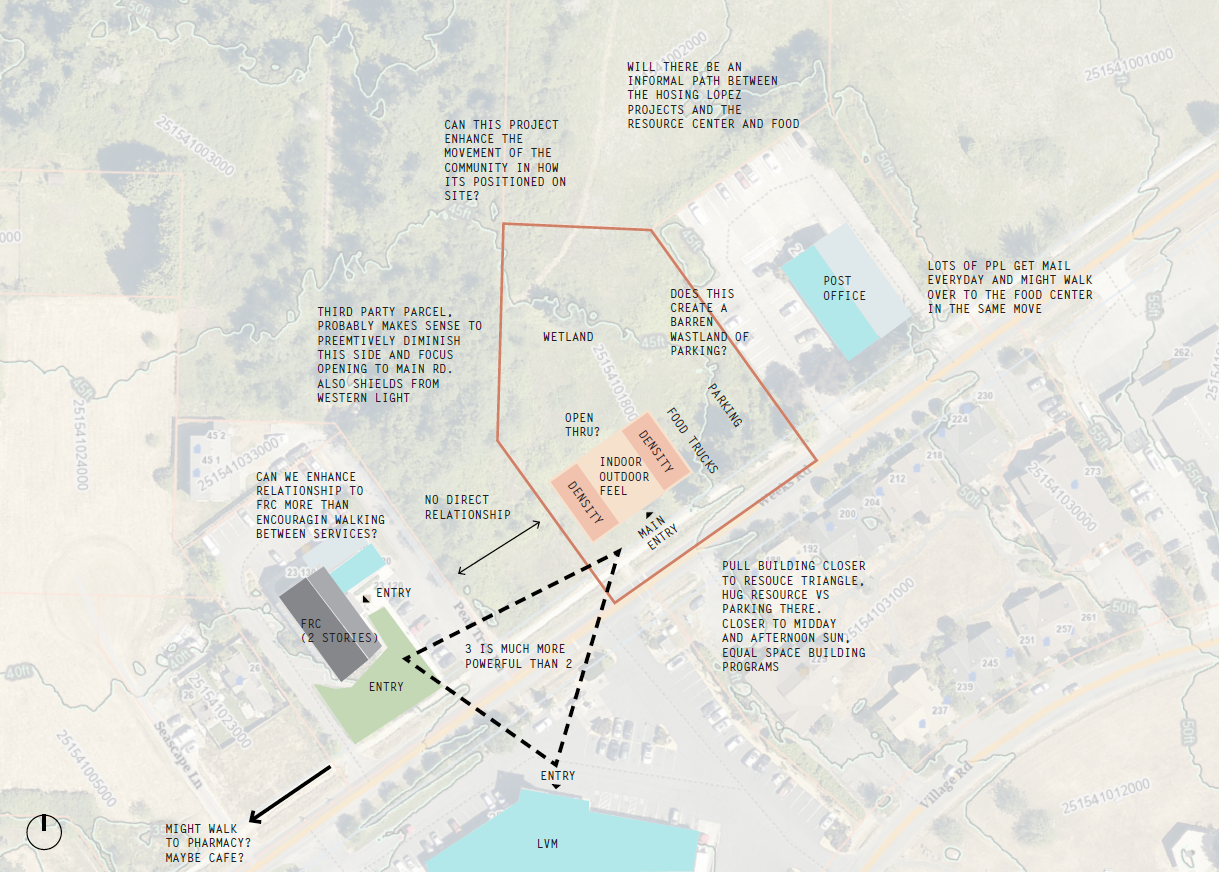
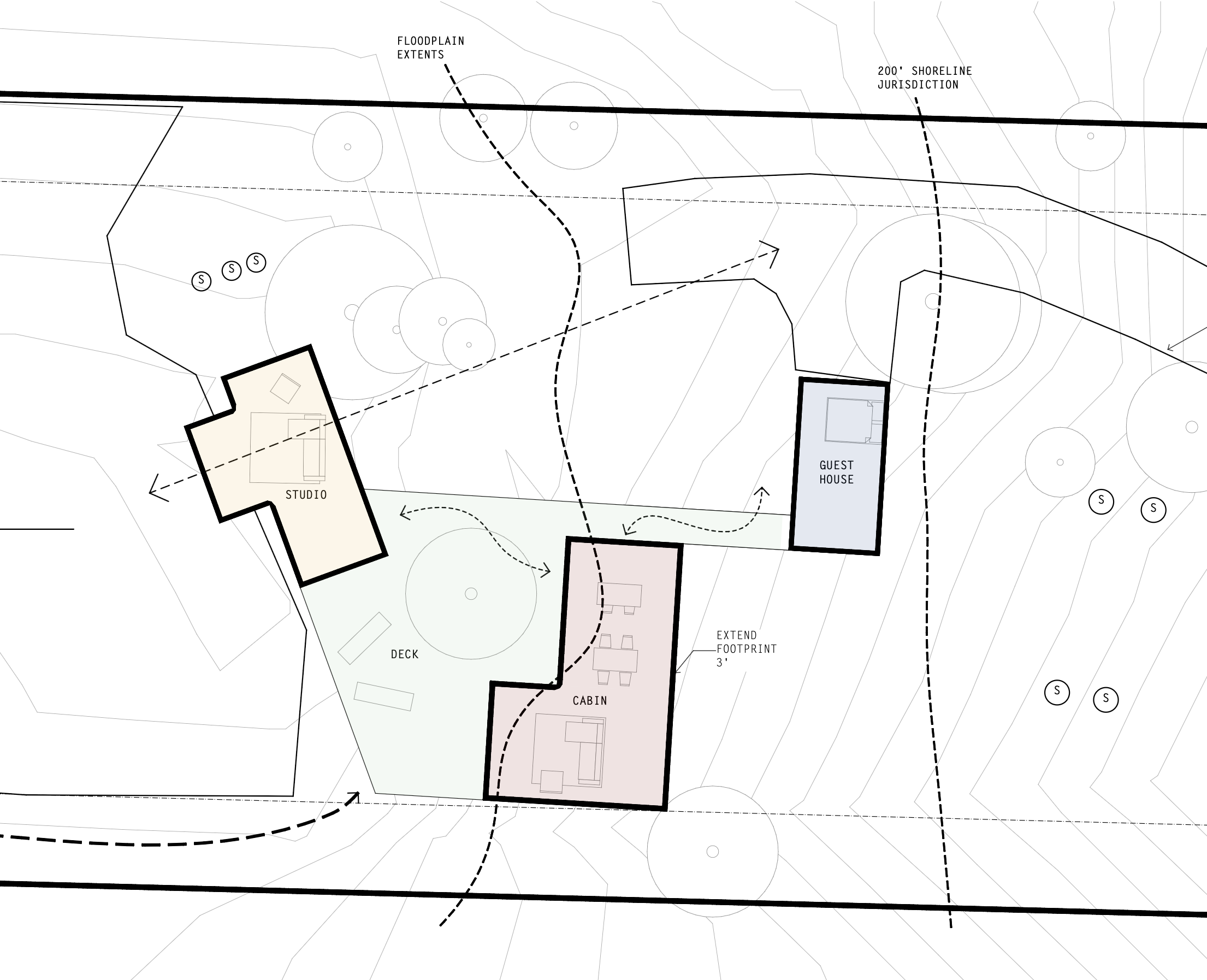
Our work begins with the land itself. We study the contours, ecology, zoning, and history of the site, along with any existing structures, to understand both its constraints and its potential.
From there, we assess feasibility, looking closely at what the site allows and what it resists. We review existing conditions with the client, establish initial siting criteria, and begin to map out early possibilities.
This includes coordinating with utilities and infrastructure such as water, septic, power, and telecommunications, and working with local jurisdictions to understand what is permissible, both on and off the site.
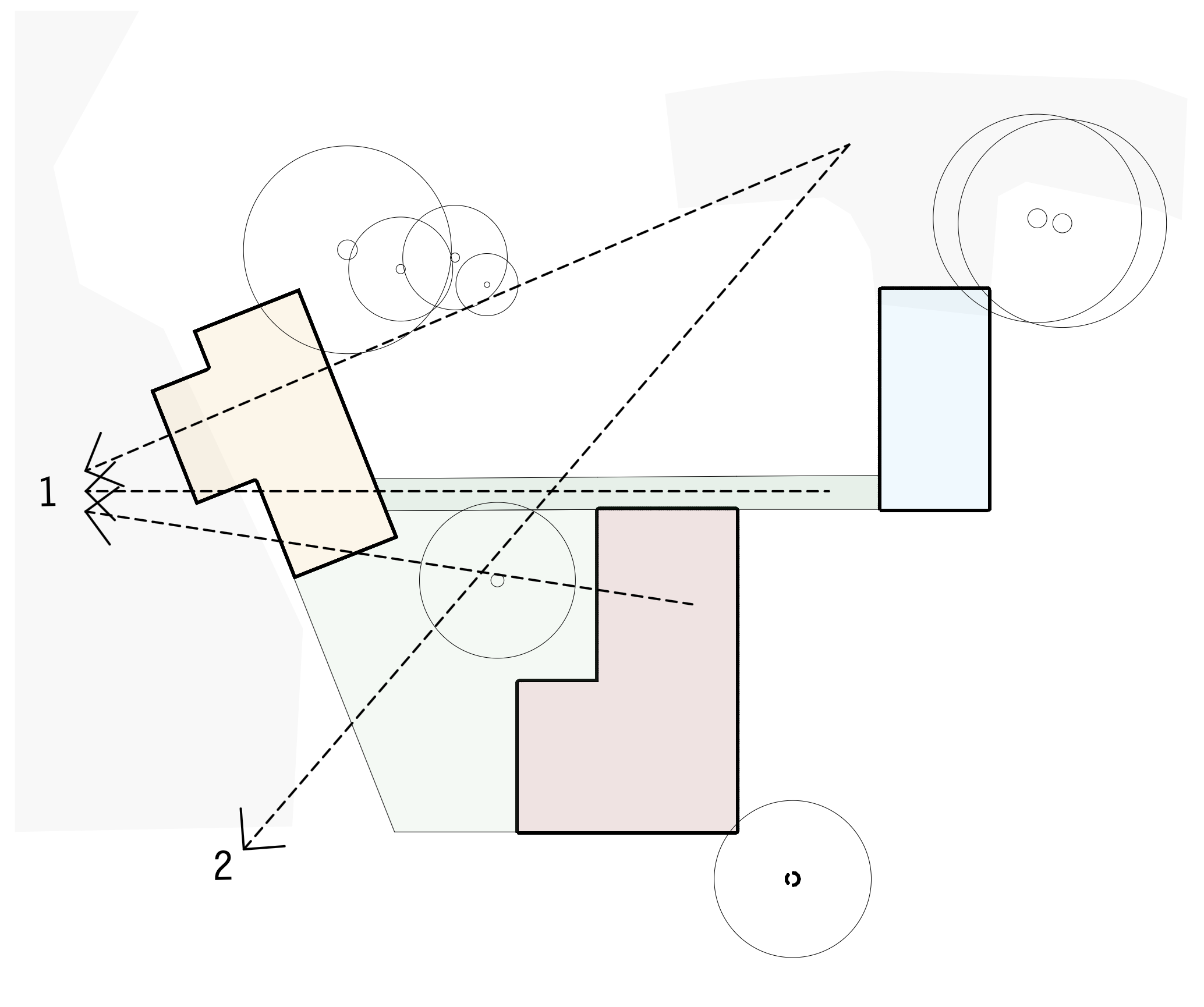
Out of this, an early framework begins to take shape. Program needs are clarified, and initial diagrams and site plans emerge, not as fixed solutions, but as a way of understanding how the project might take hold within the realities of the place.
Schematic Design
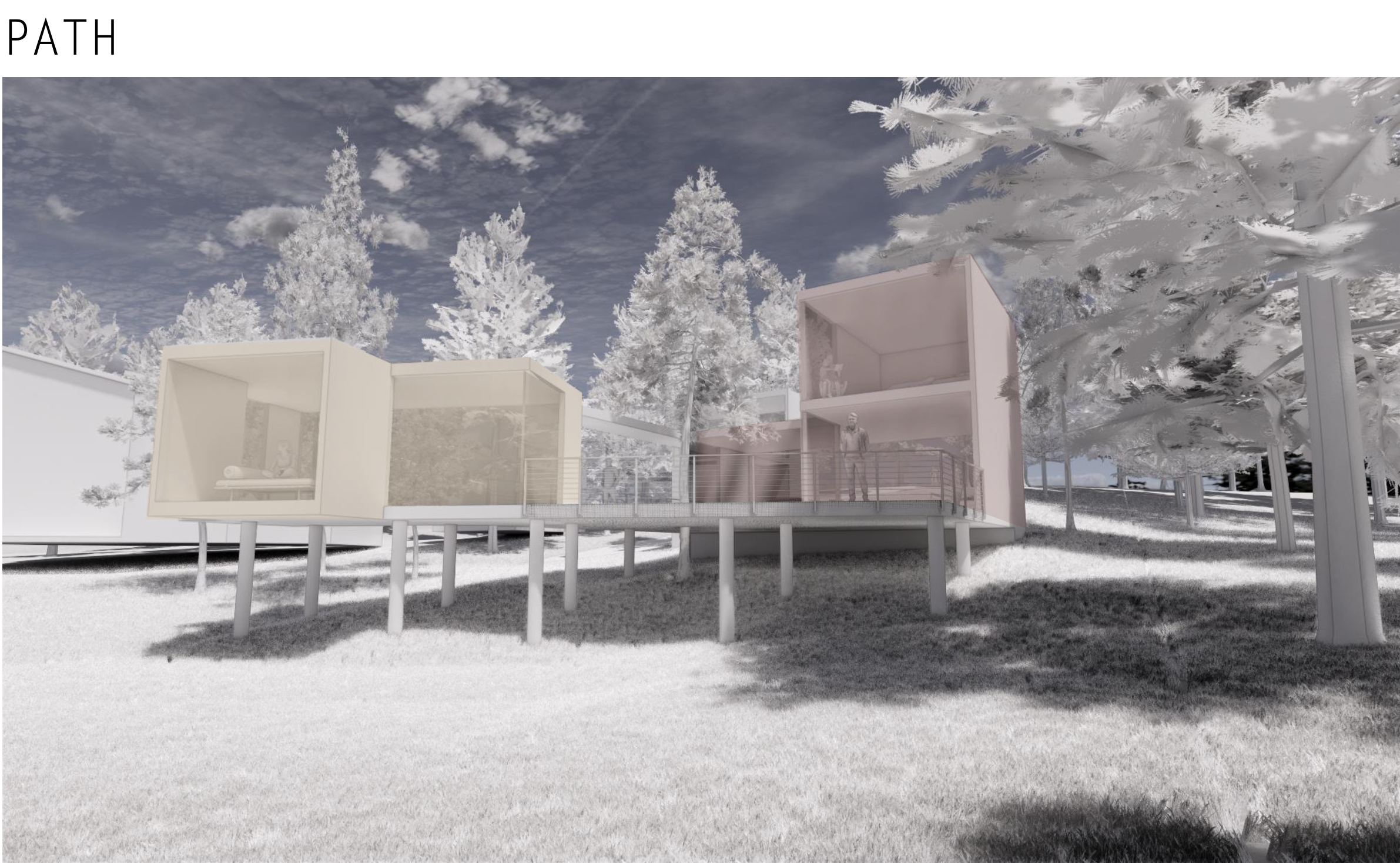
Building on what we’ve learned from the site, schematic design begins to give form to the project. We translate early goals, constraints, and opportunities into a preliminary design strategy.
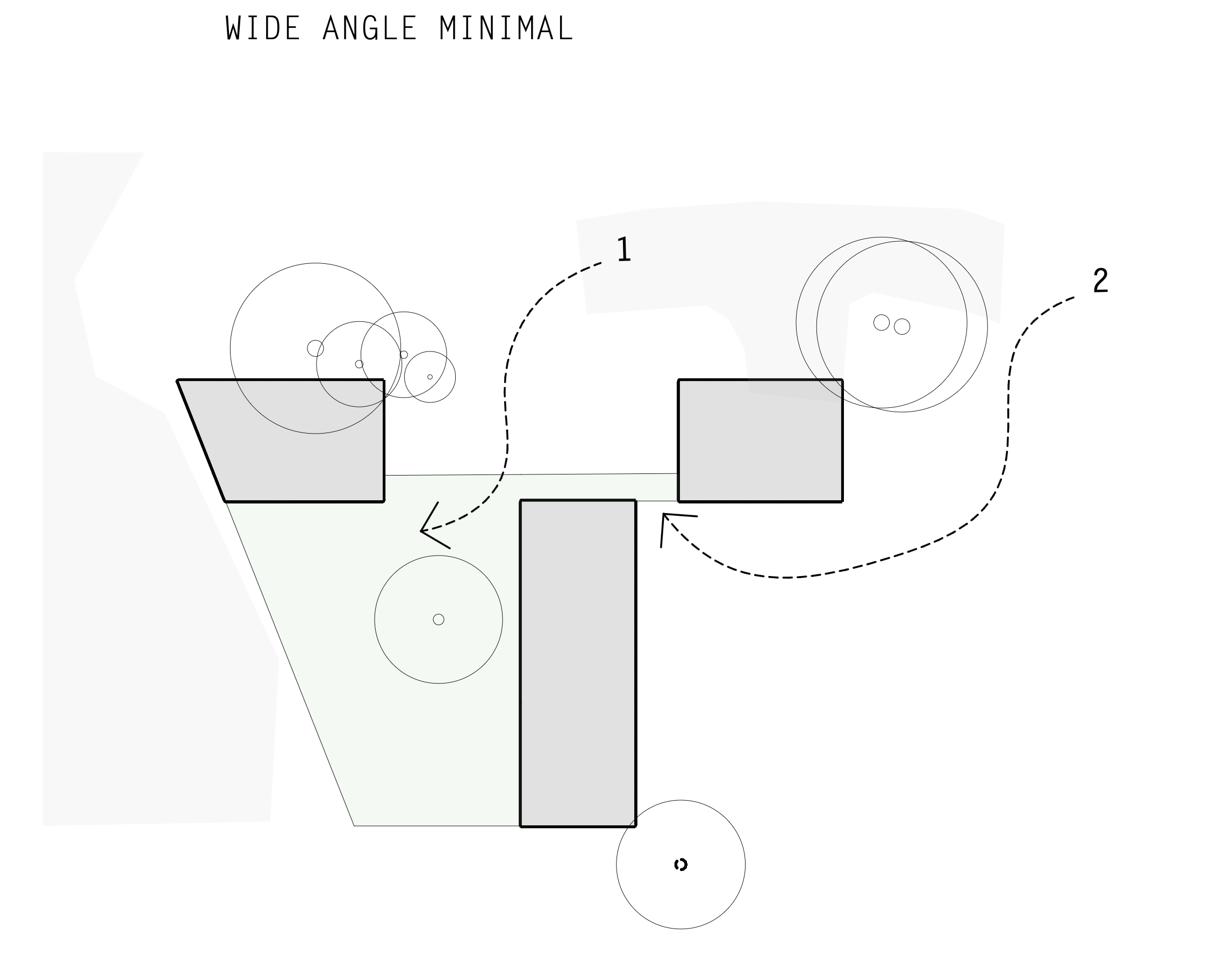
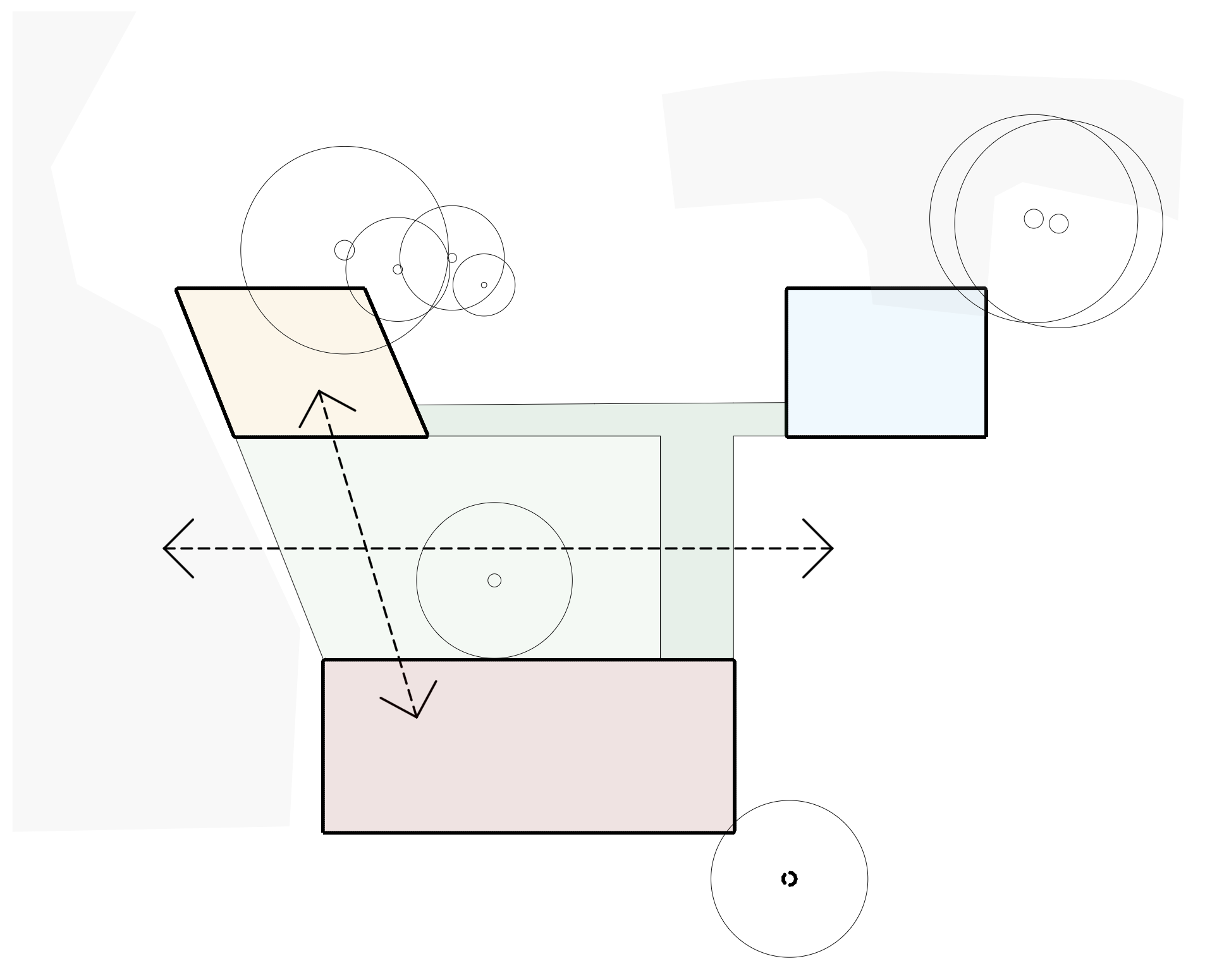
Early plans, diagrams, and massing studies explore different ways the project might take shape, often drawing from sketches, references, and ongoing conversations with the client.
The process is iterative. Together, we evaluate options, refining priorities around cost, performance, phasing, and functionality. Through this back and forth, a clear direction begins to emerge.
Where appropriate, we bring in contractors early to ground the work in construction realities, incorporating preliminary input on constructability, sequencing, and cost.
Design Development
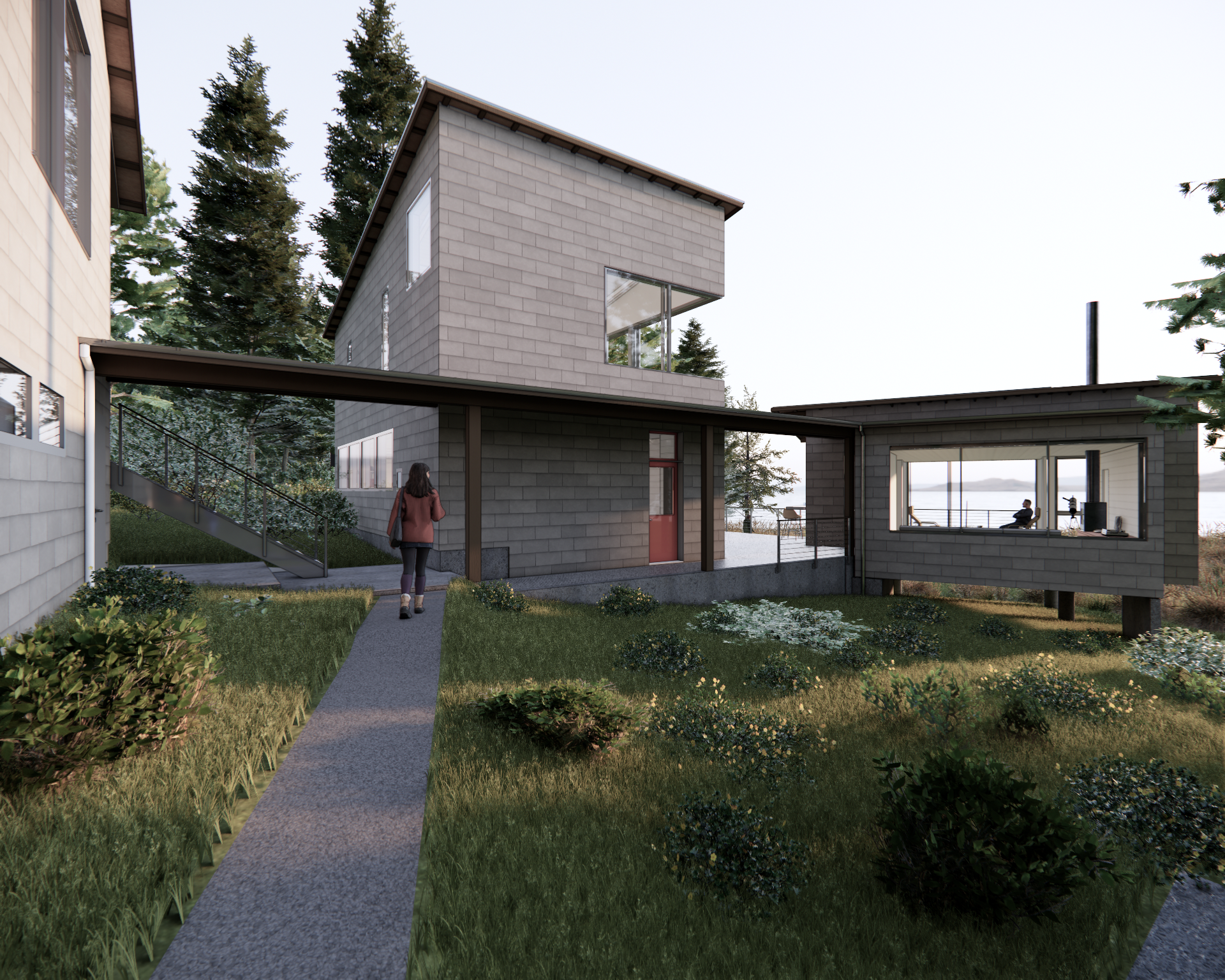
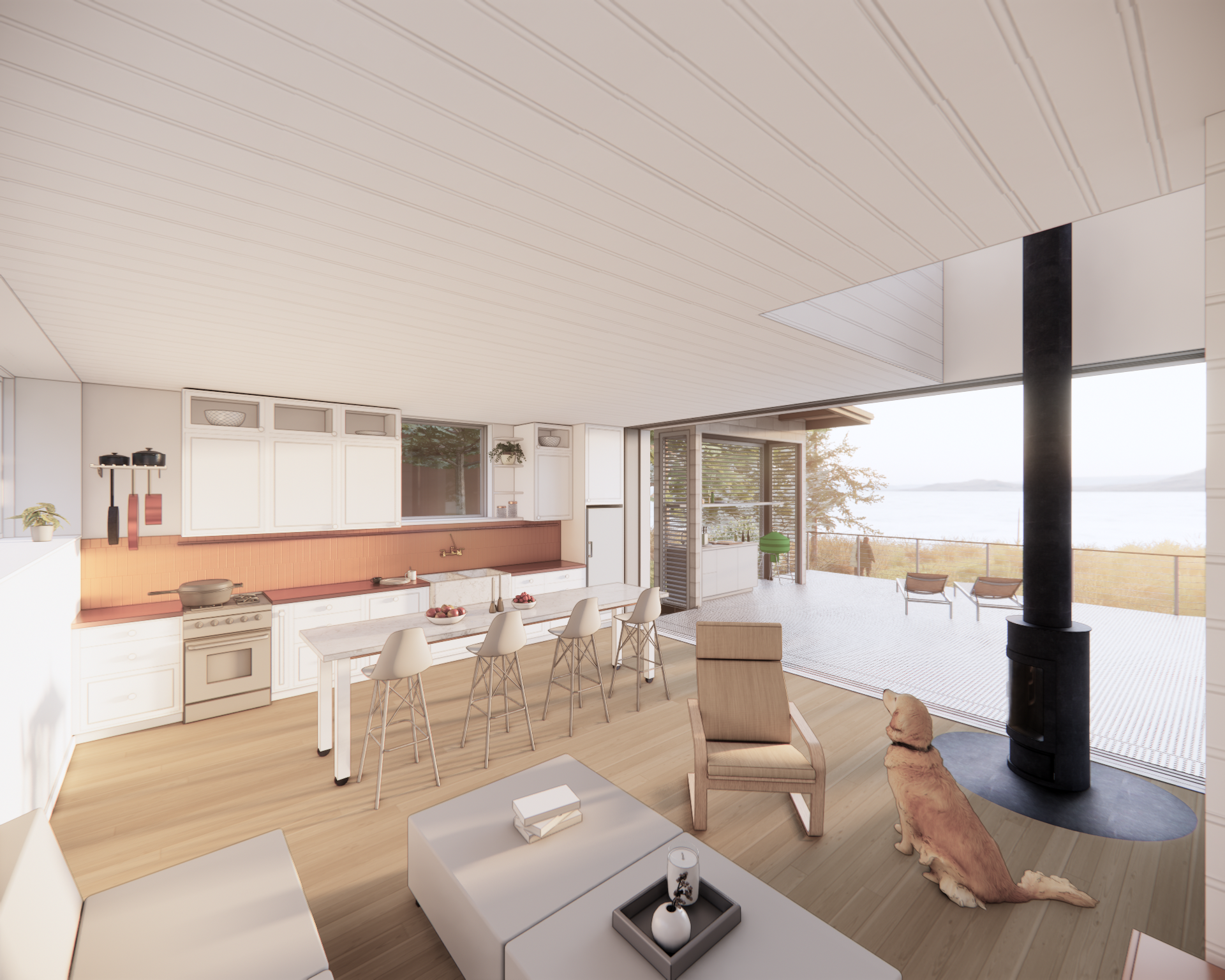
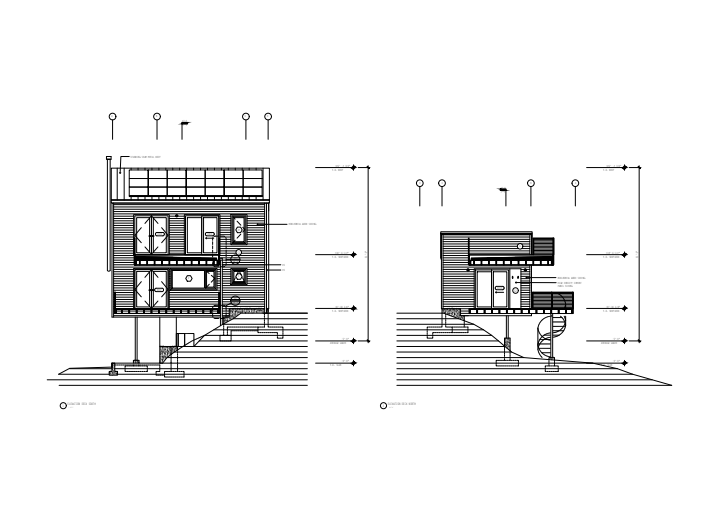
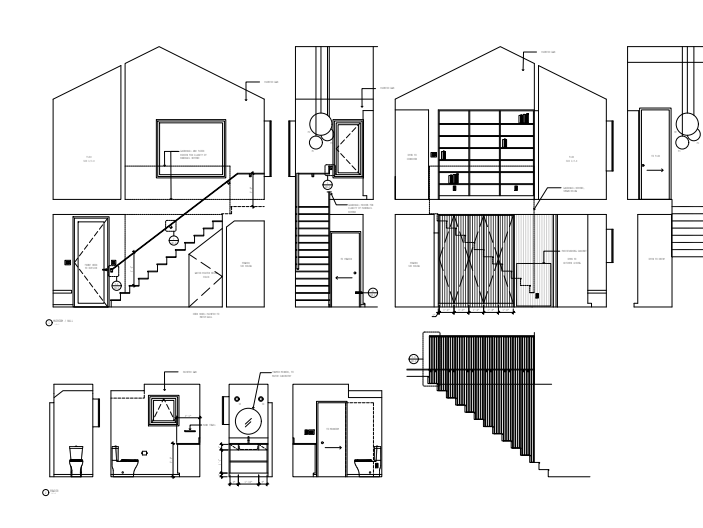
With a clear schematic direction in place, the project moves into design development. The work becomes more precise as we refine the design into a coordinated set of drawings for permitting.
At this stage, the building begins to take on technical definition. We develop construction approaches and establish the major systems that support the project, including structural, mechanical, electrical, and overall building performance. The design is shaped to meet code, zoning, accessibility, and environmental requirements, ensuring it can move forward through regulatory review.
We work closely with engineers and consultants to integrate each discipline into a cohesive whole, aligning structure, systems, and site with the architectural intent. Throughout, we continue to evaluate constructability and cost, making adjustments where needed.
Construction Documentation
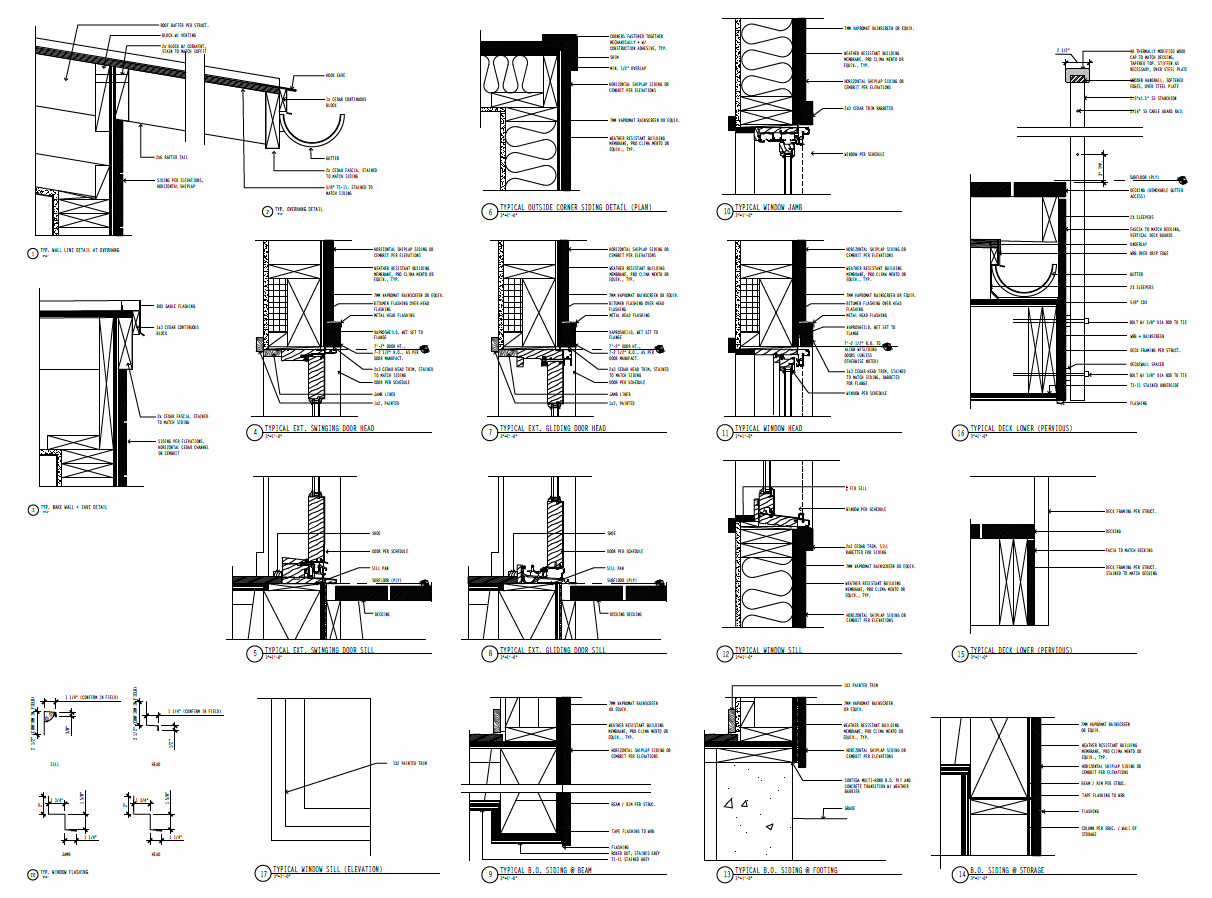
In this phase, we translate the design into a precise set of drawings and specifications. Detailed plans, sections, and assemblies define how the building is put together, and material selections are finalized.
We work closely with engineers and consultants to align architectural, structural, civil, landscape, and MEP systems into a single, cohesive set of documents.
Construction Support
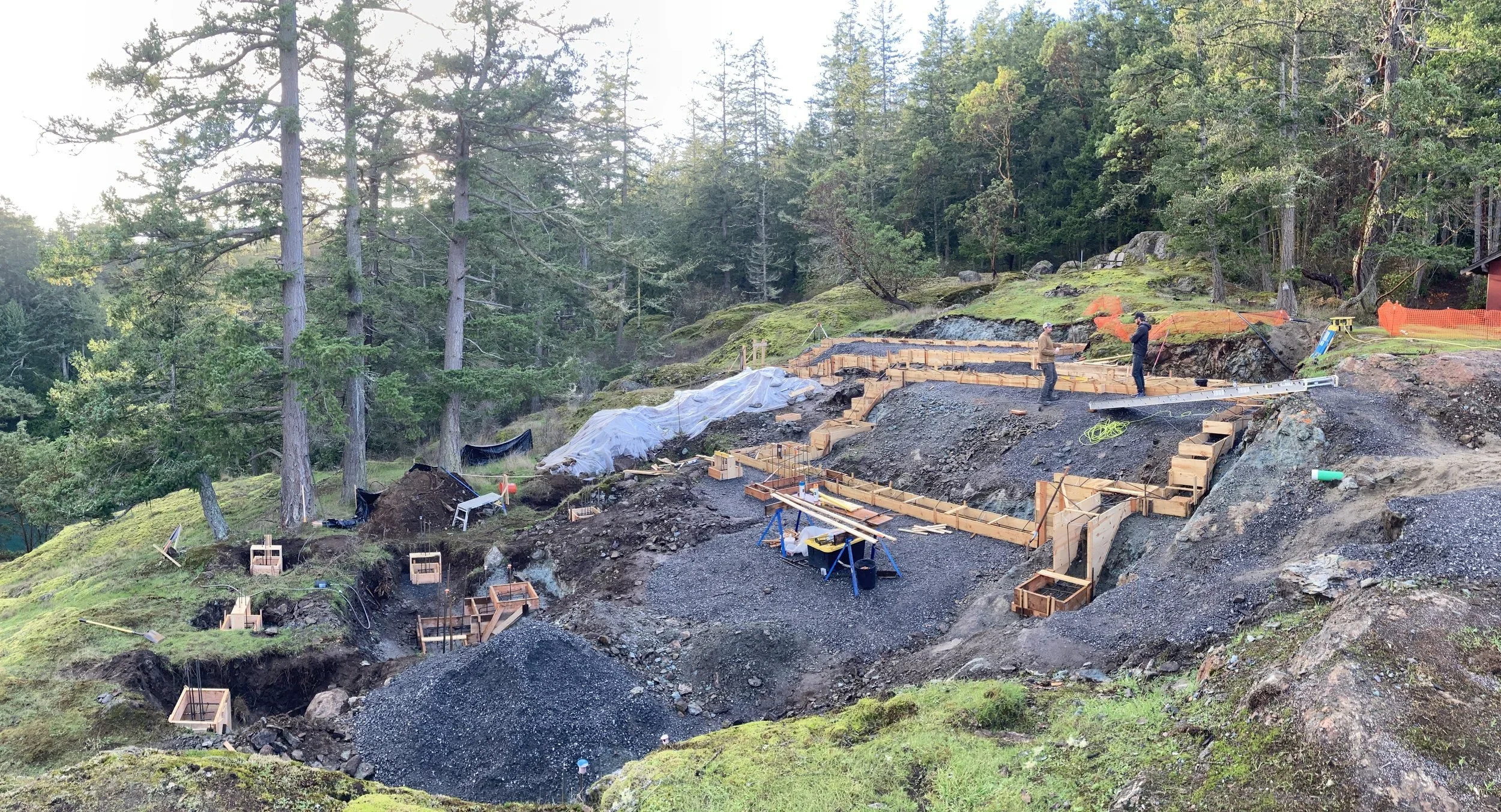
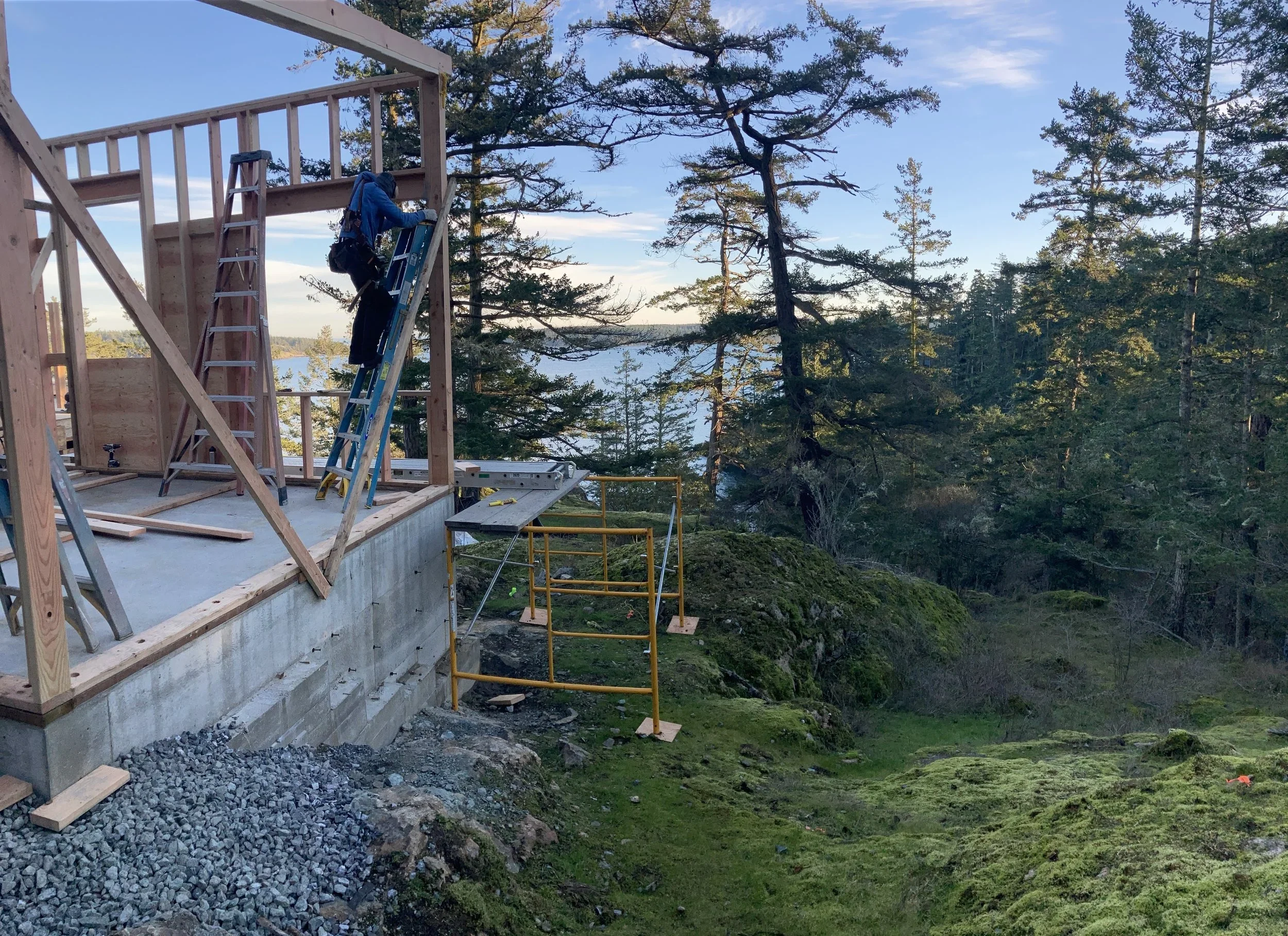
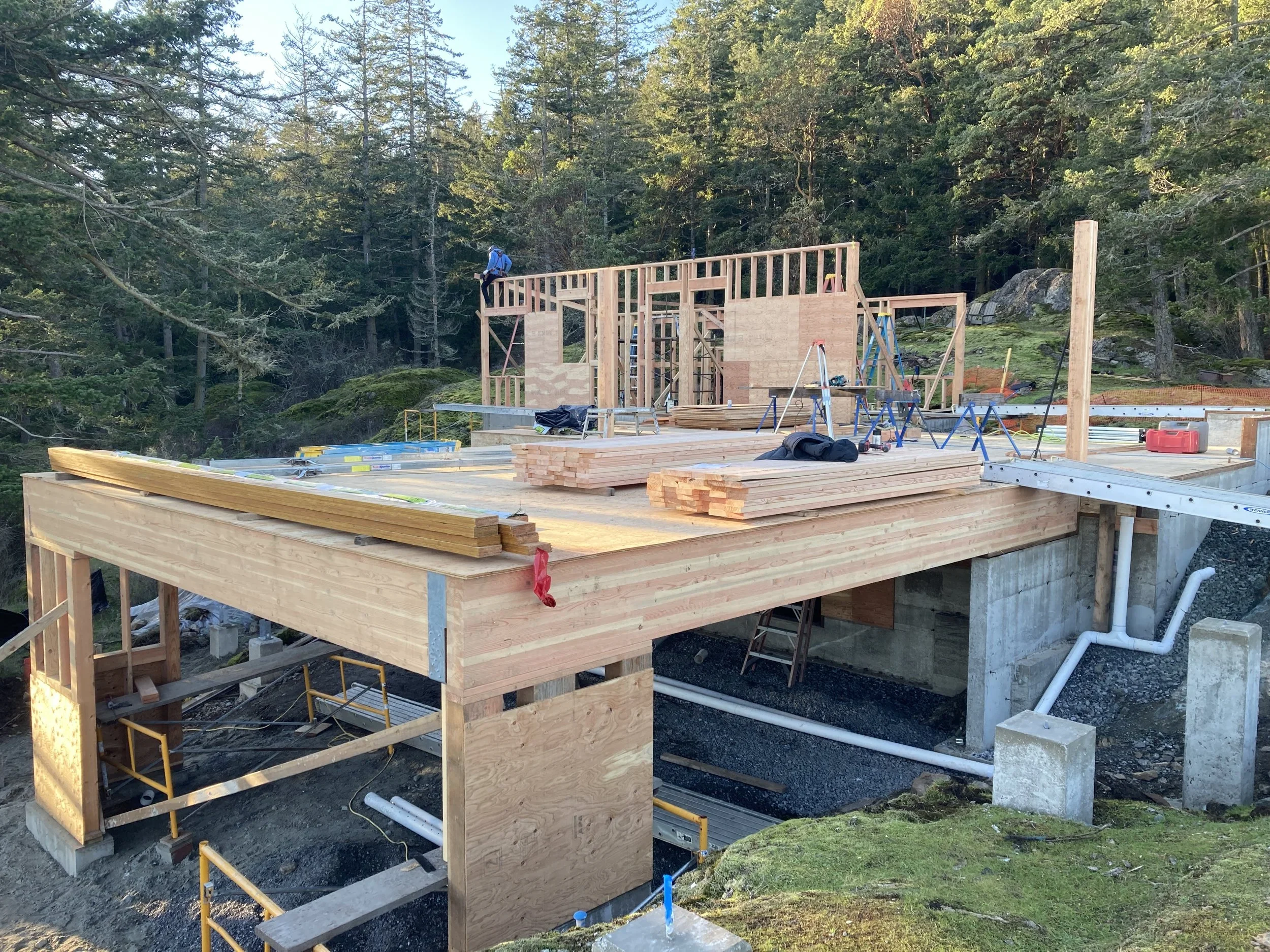
During construction, we remain involved to support the work as it takes shape in the field. We stay in close communication with the client, contractor, and consultants, participating in site visits, meetings, and ongoing coordination.
As questions arise, we provide clarification on drawings, details, and design intent, helping to resolve conditions that cannot be fully anticipated on paper. Throughout, we monitor progress and support alignment between the design and the work in place.
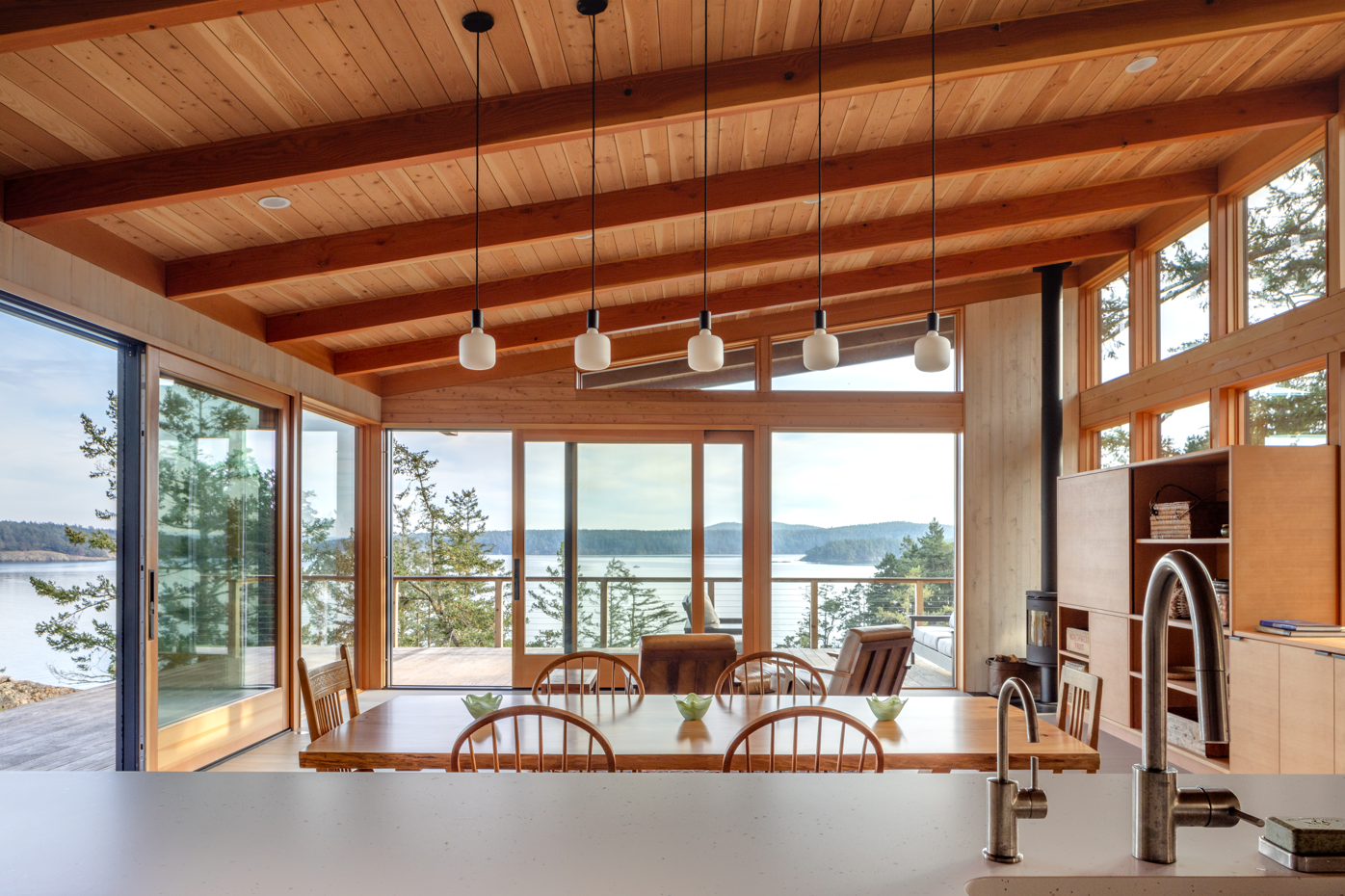
Project Closeout
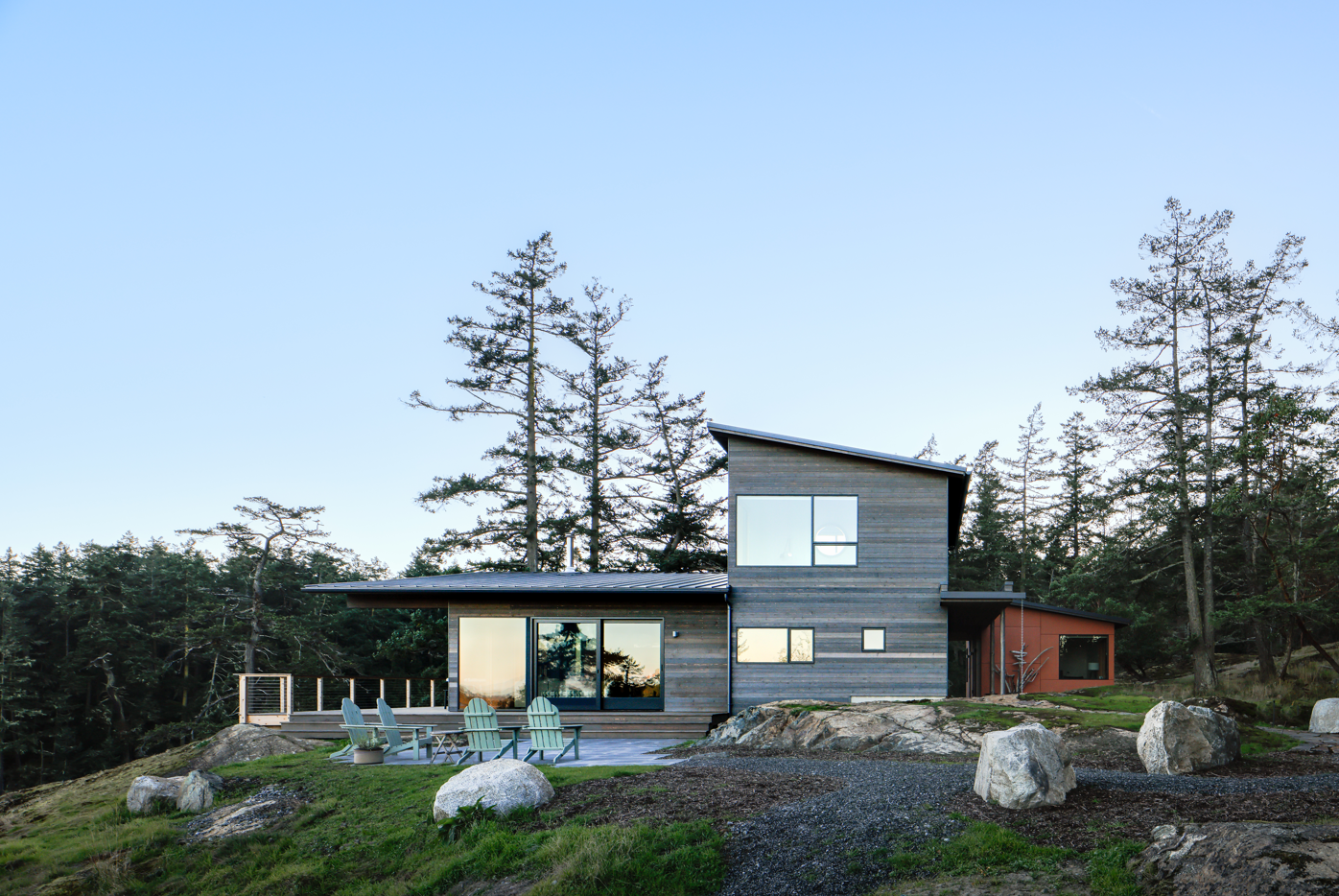
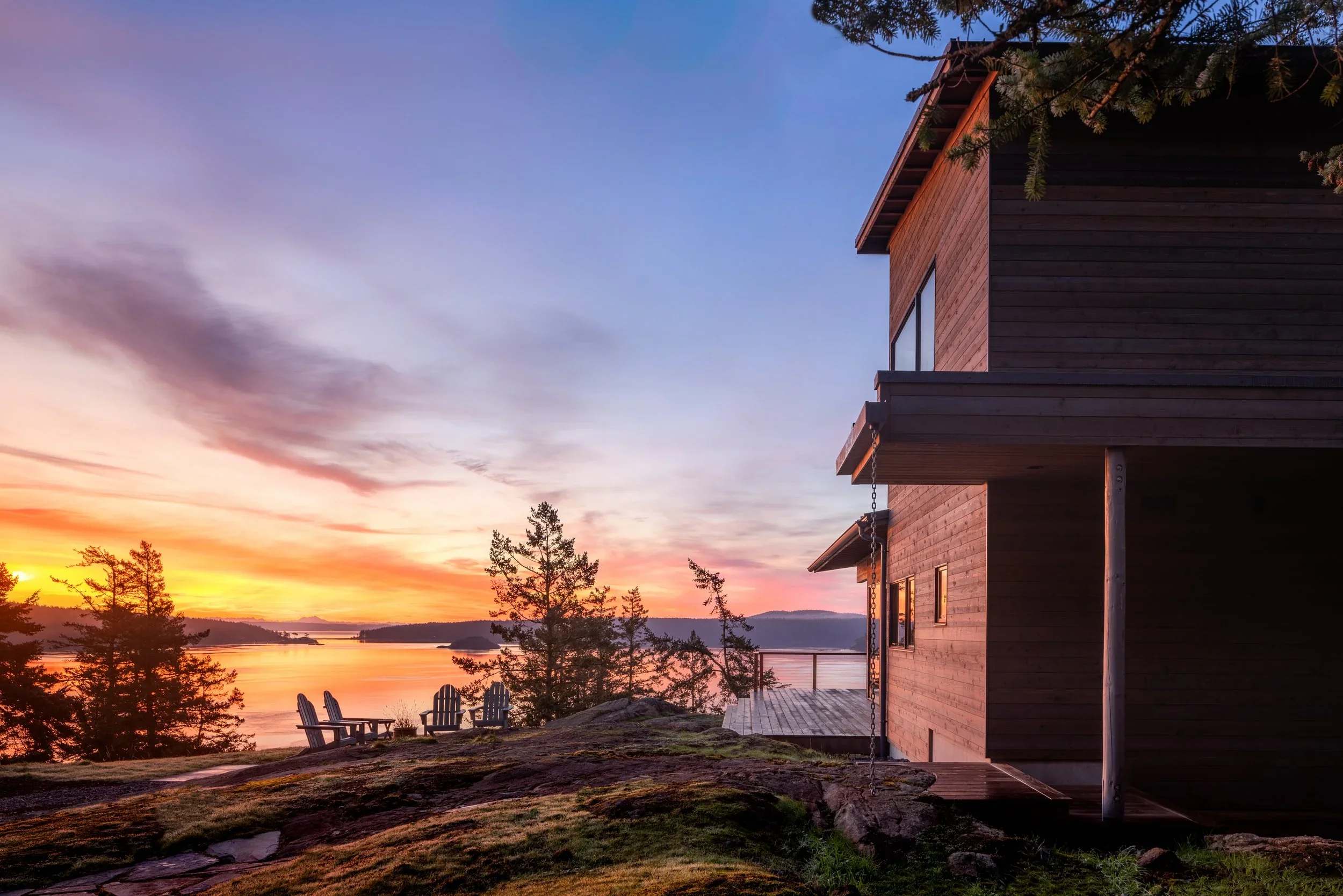
As construction wraps, we walk the project with our clients, review the work in place, and address final details to support a smooth transition into occupancy.
Our relationship does not end at completion. We stay in touch, learning from how the building performs and how it is lived in over time.
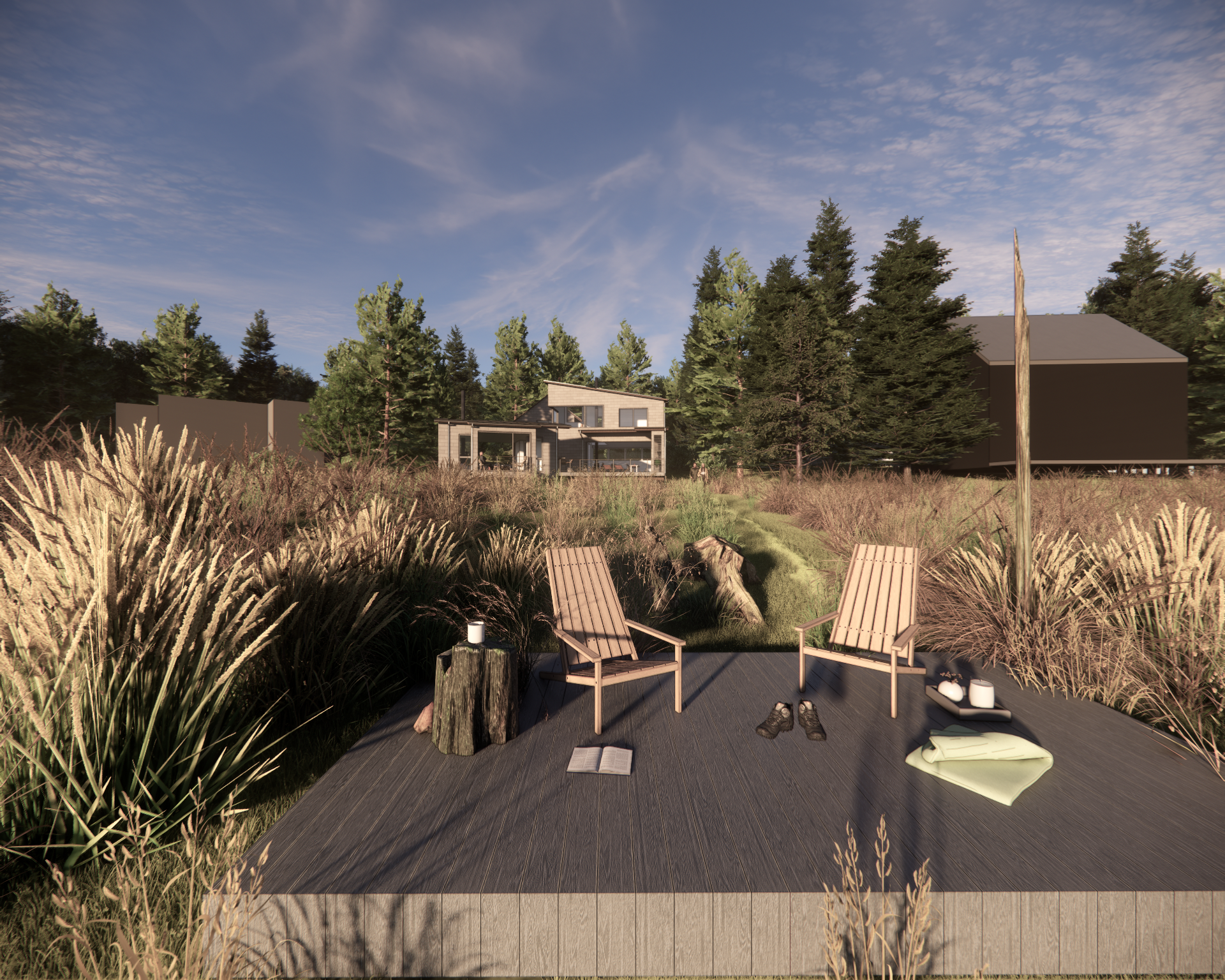
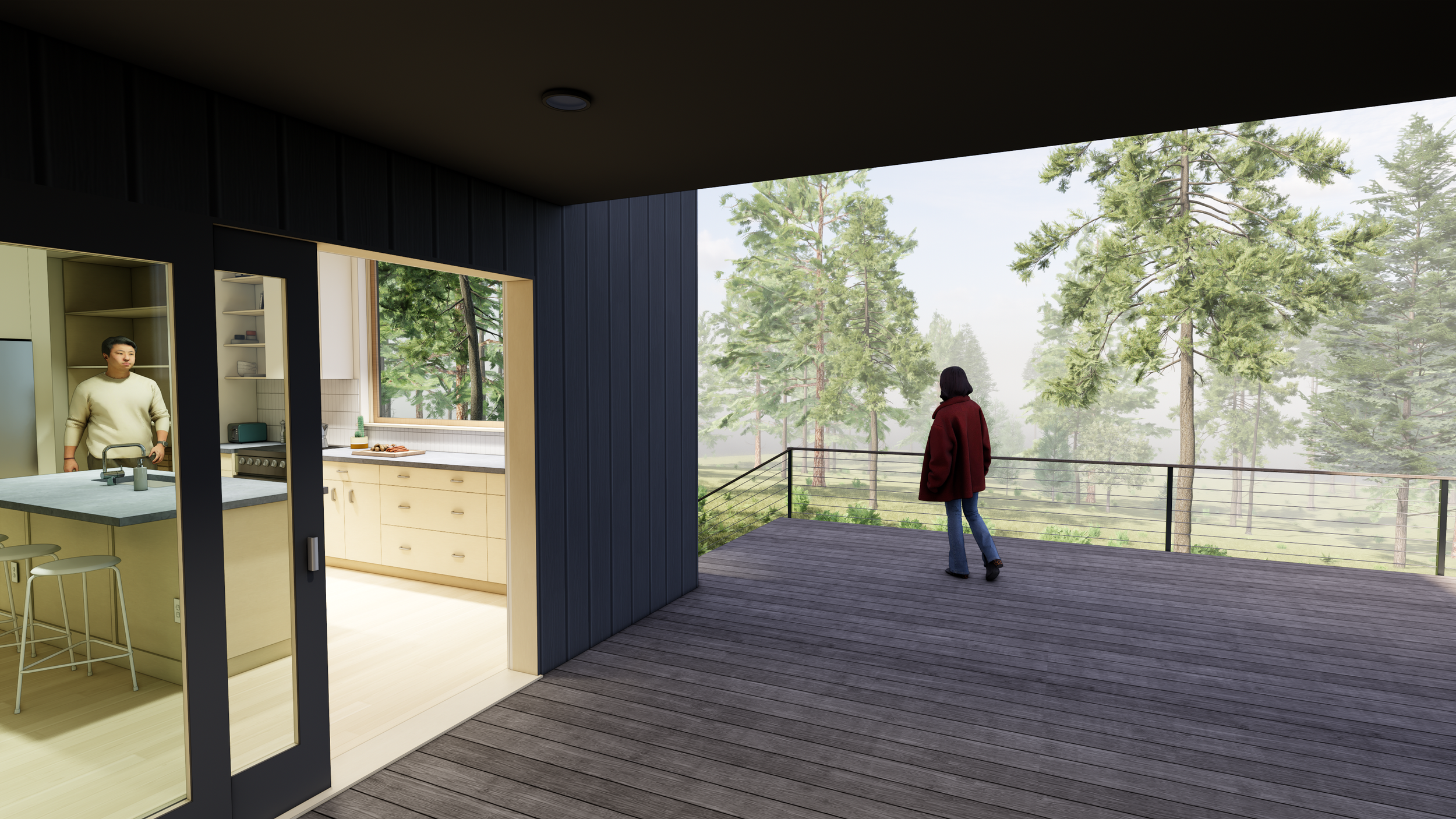
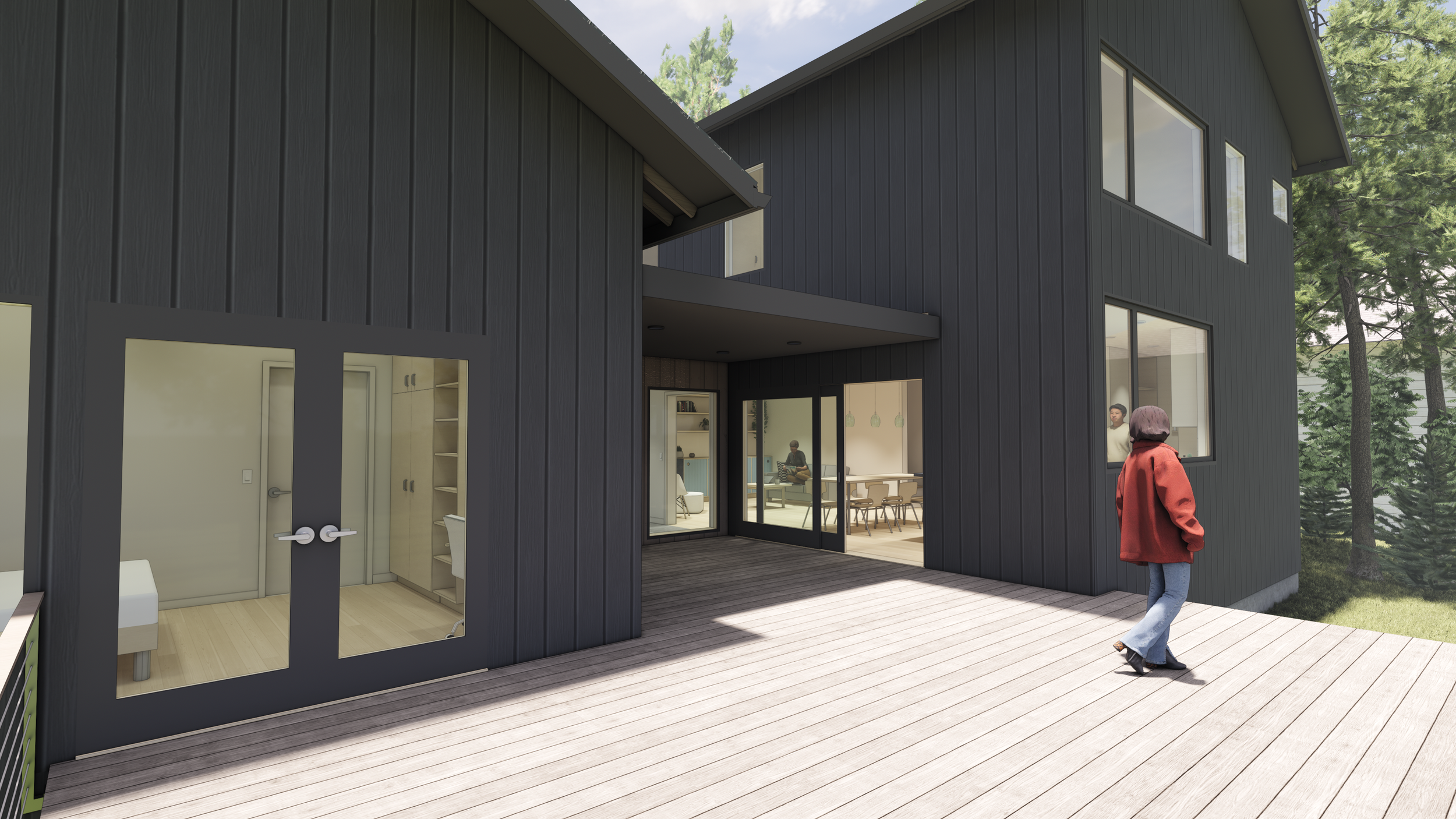
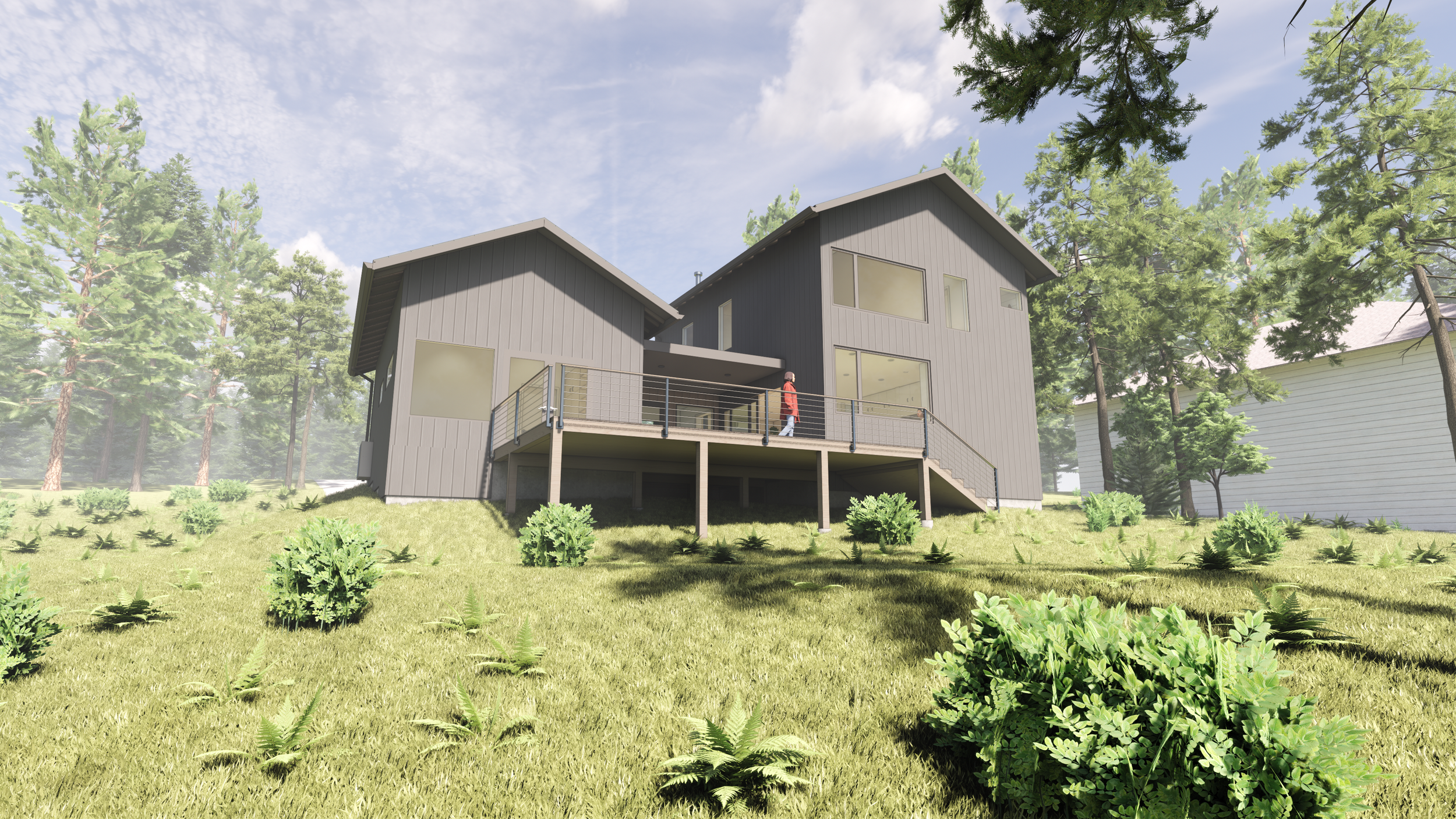
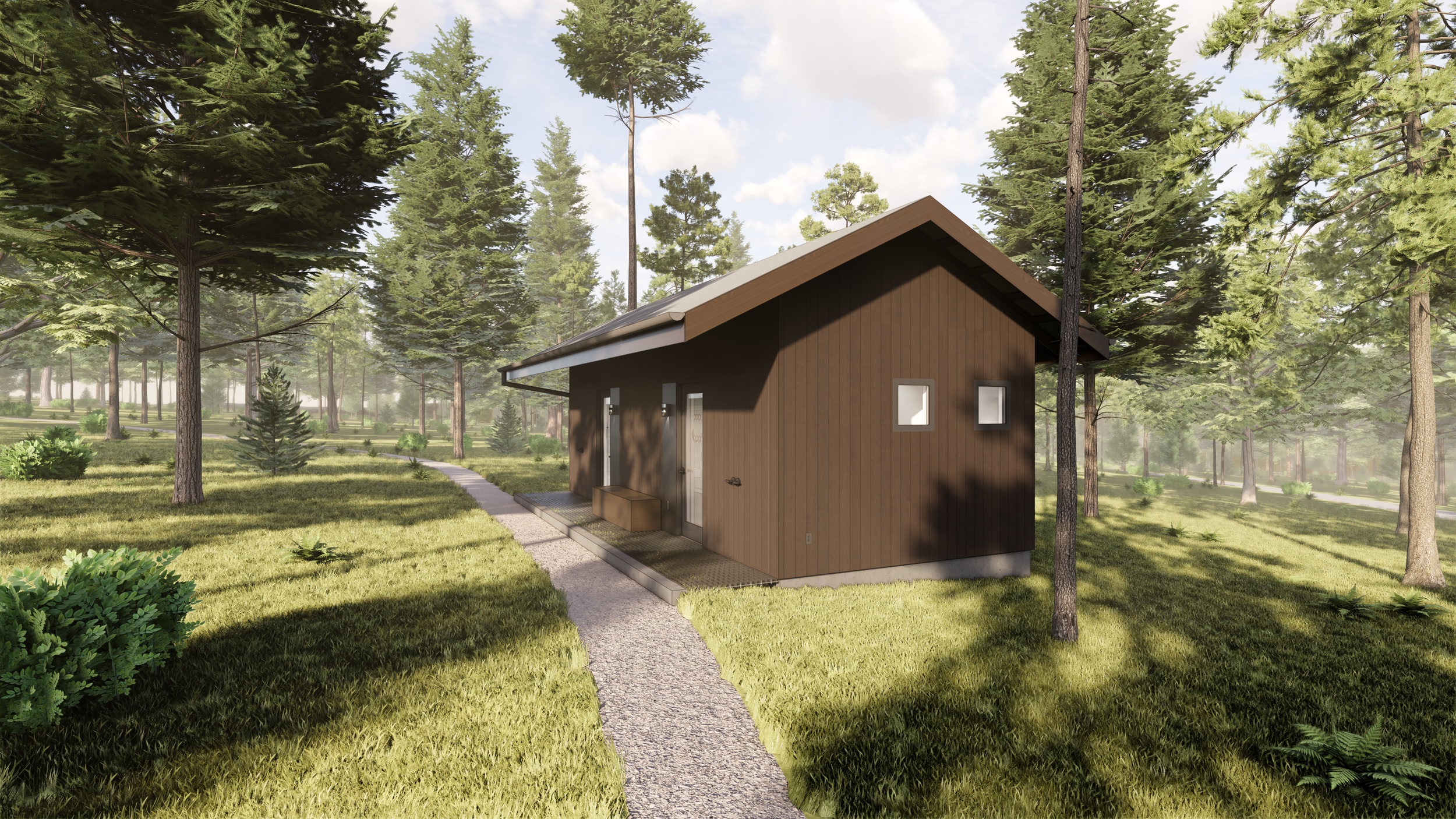
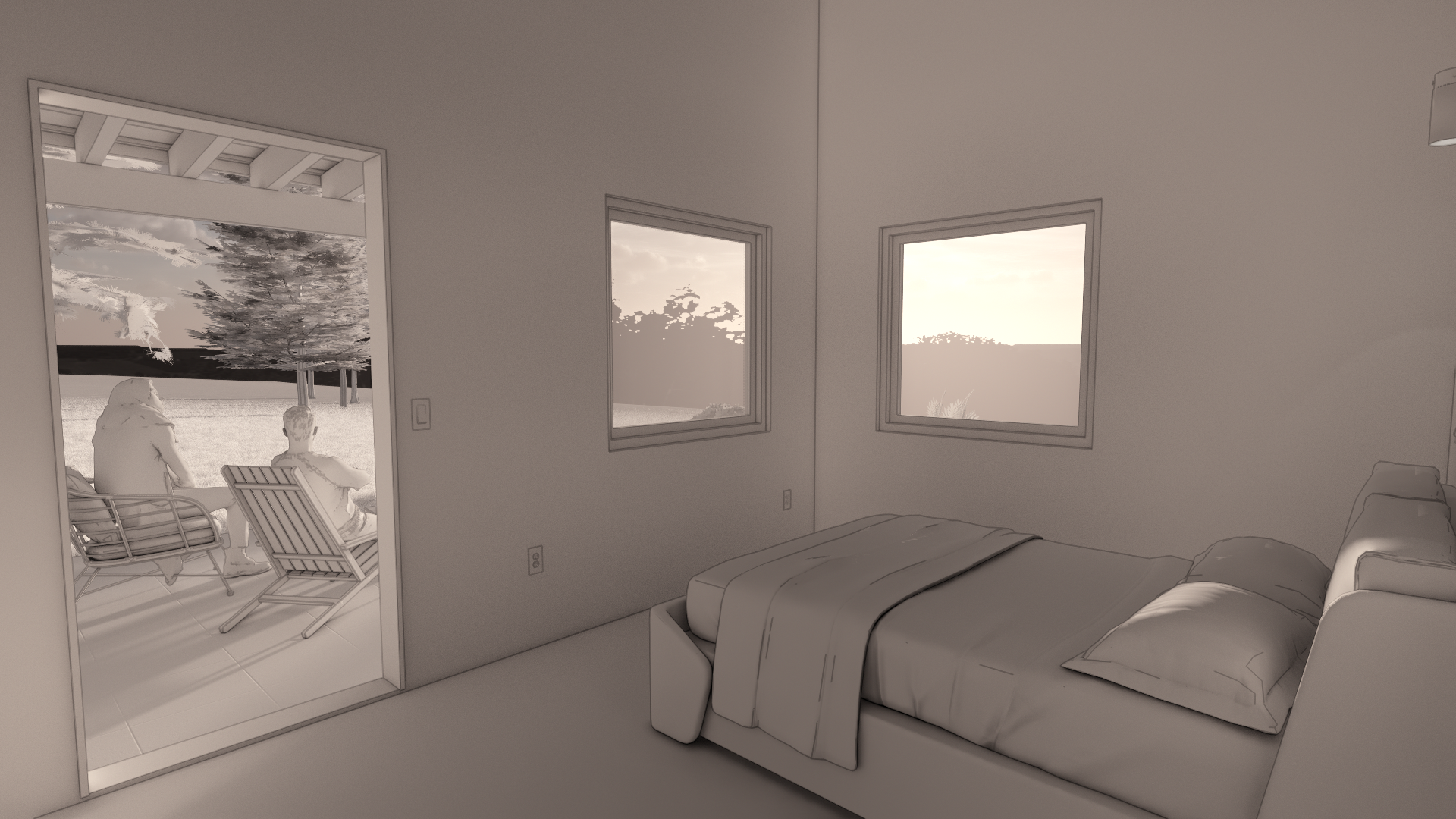
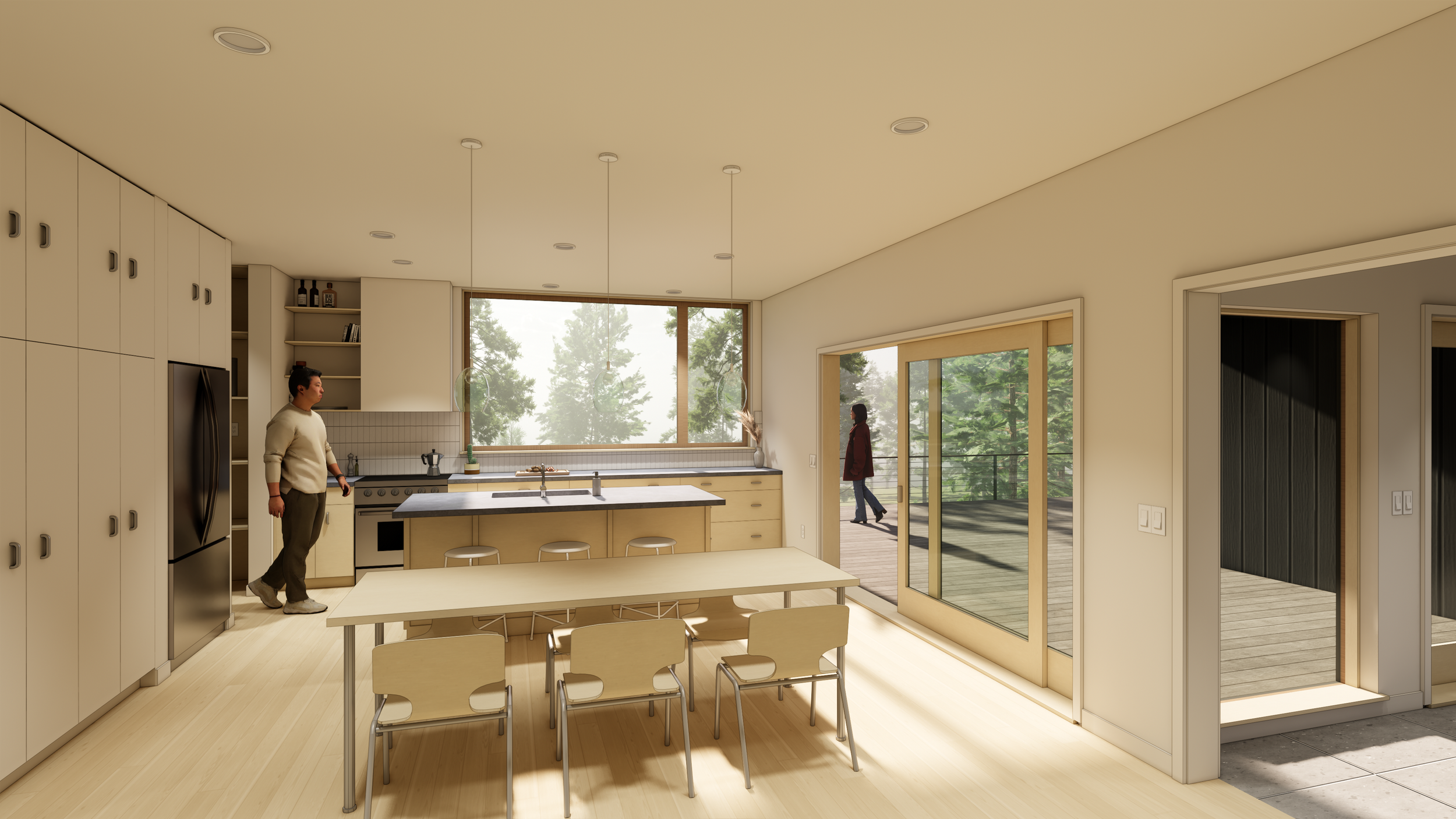
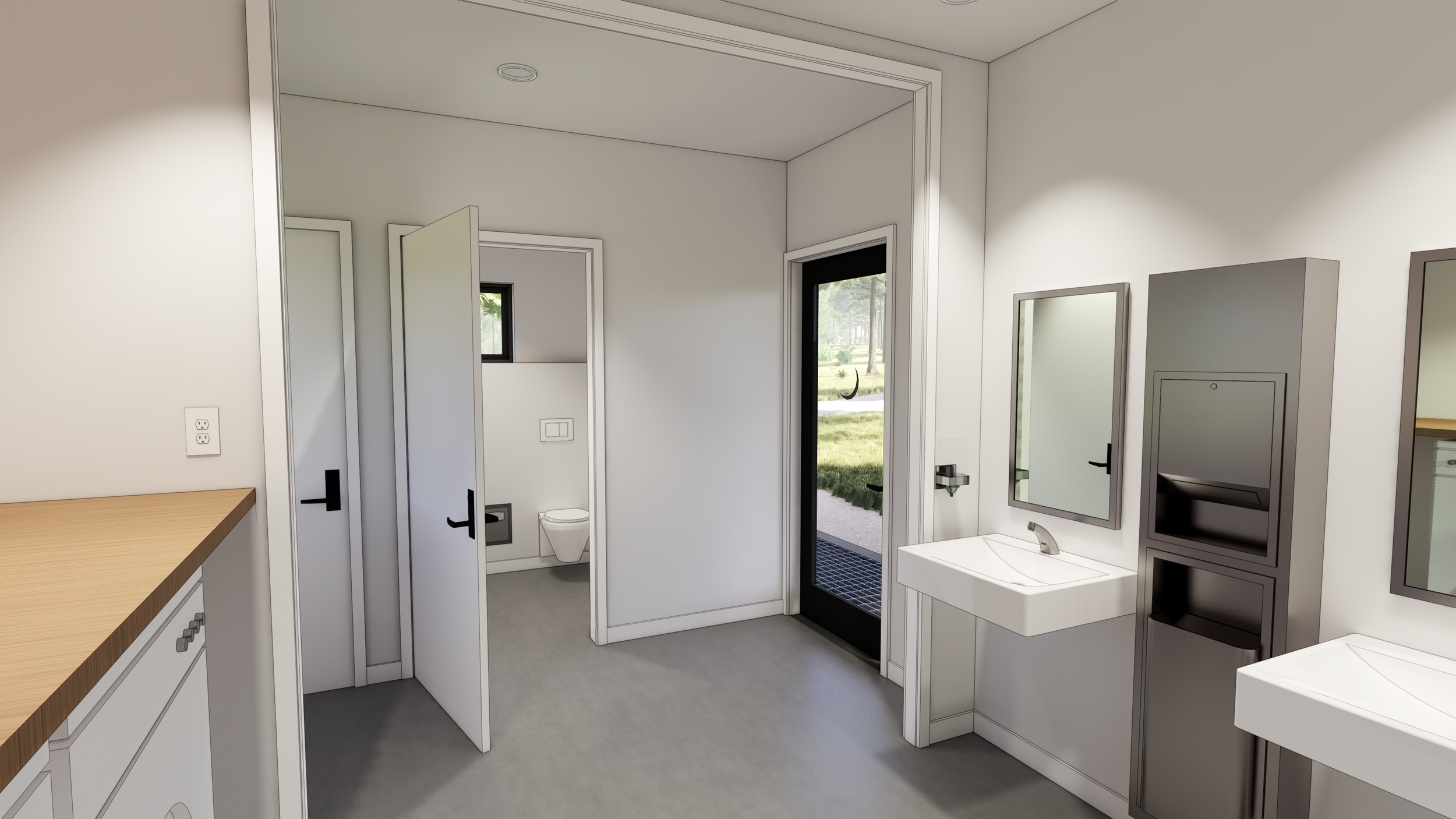
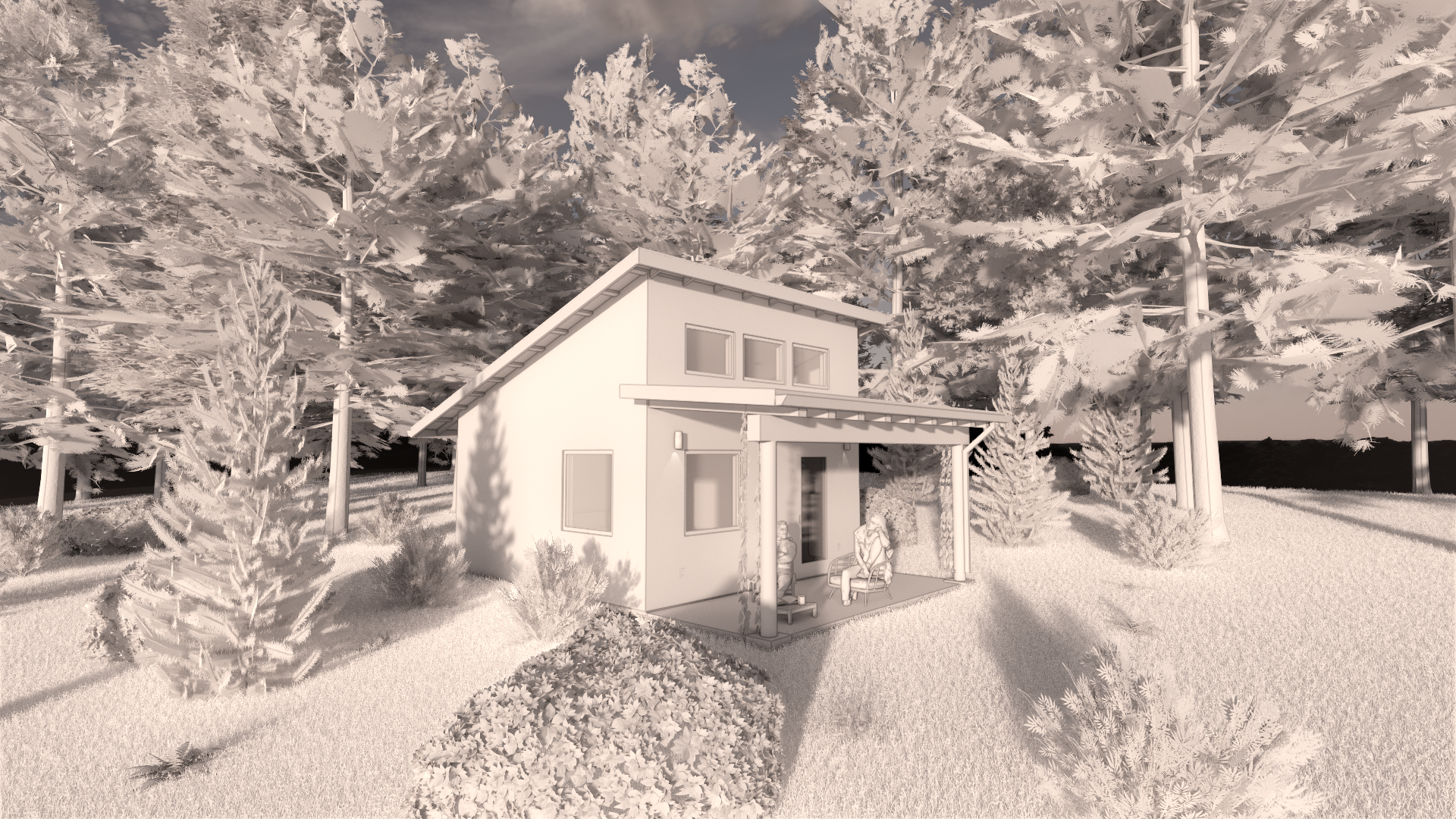
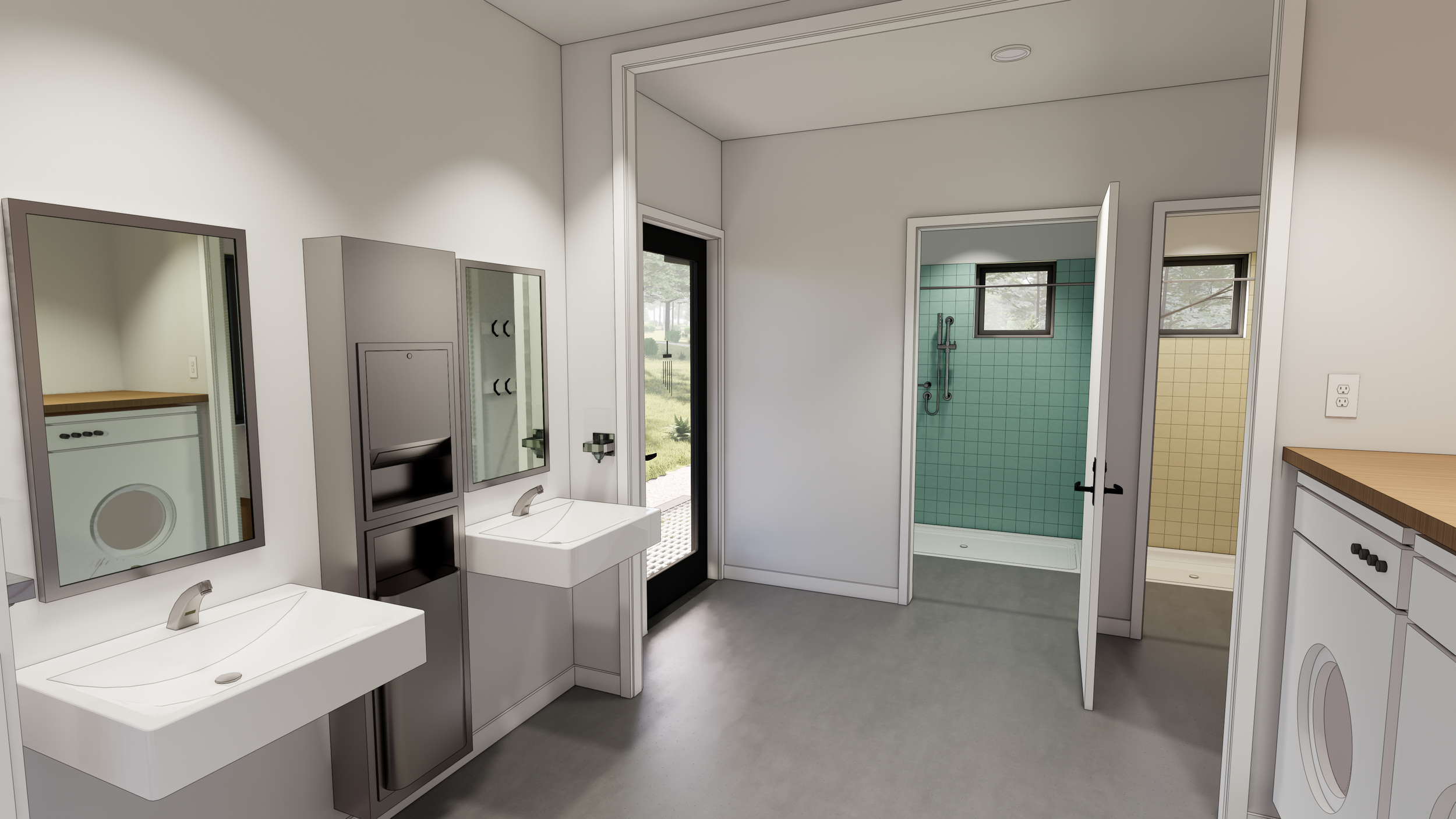
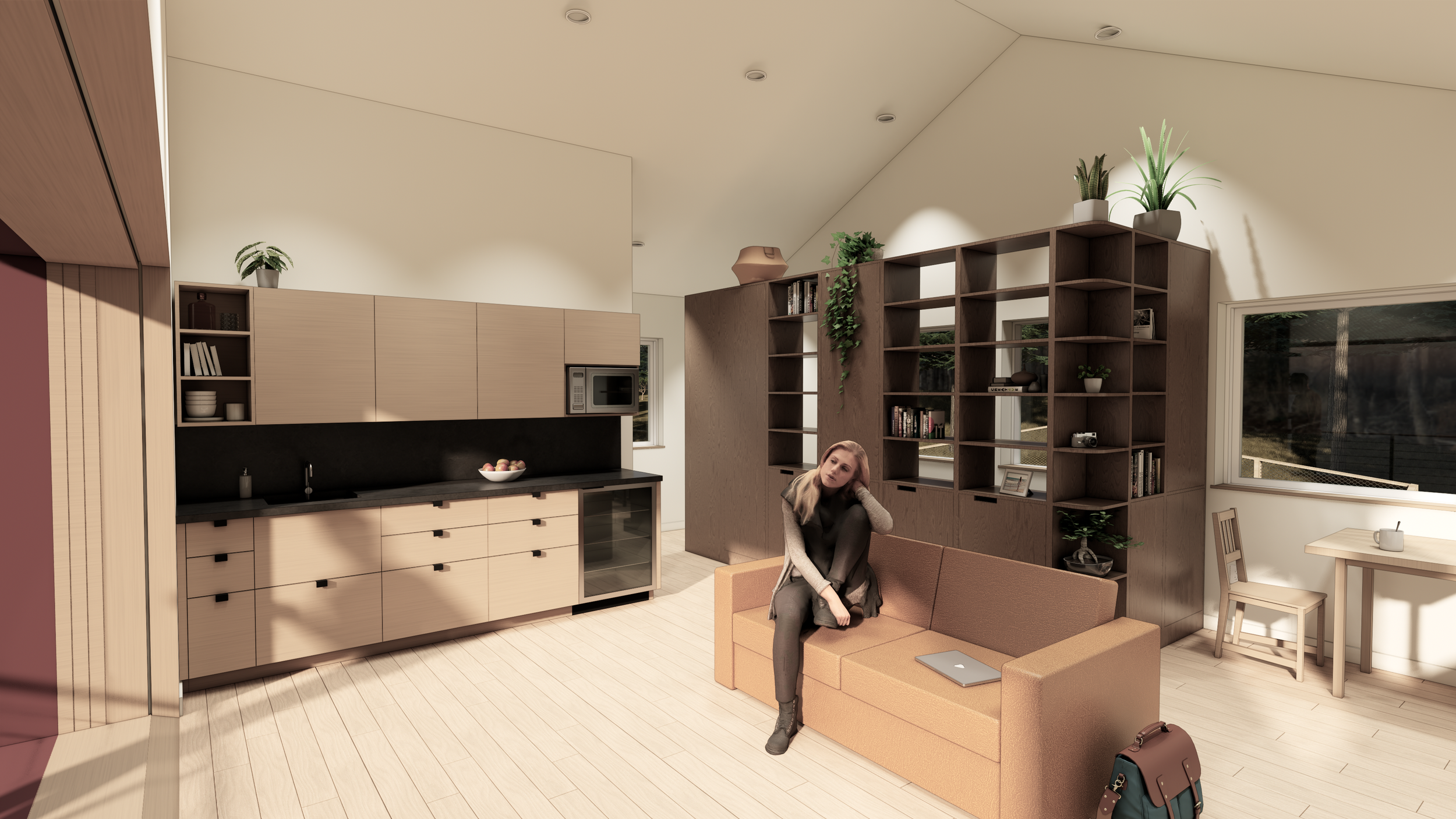
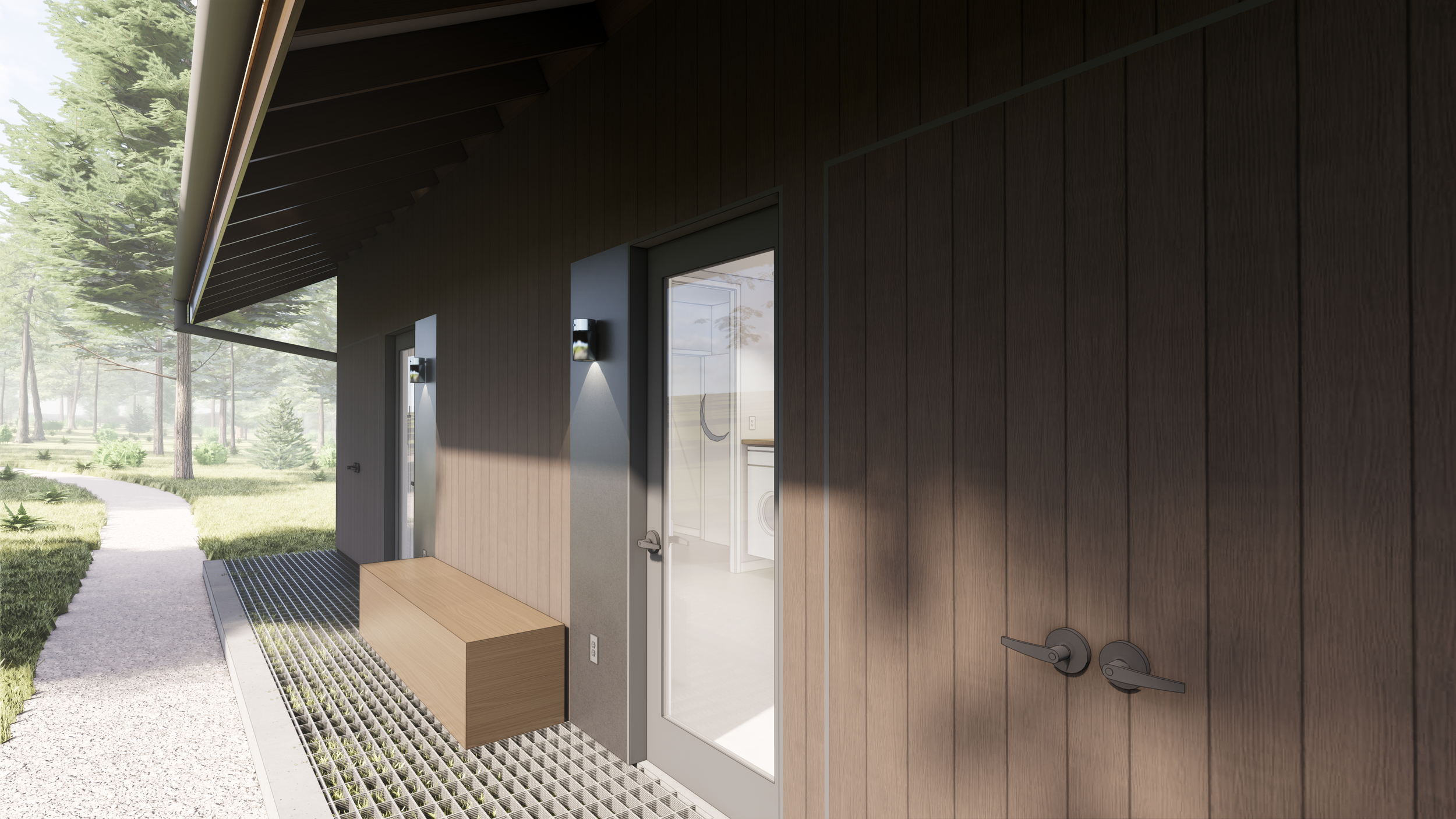
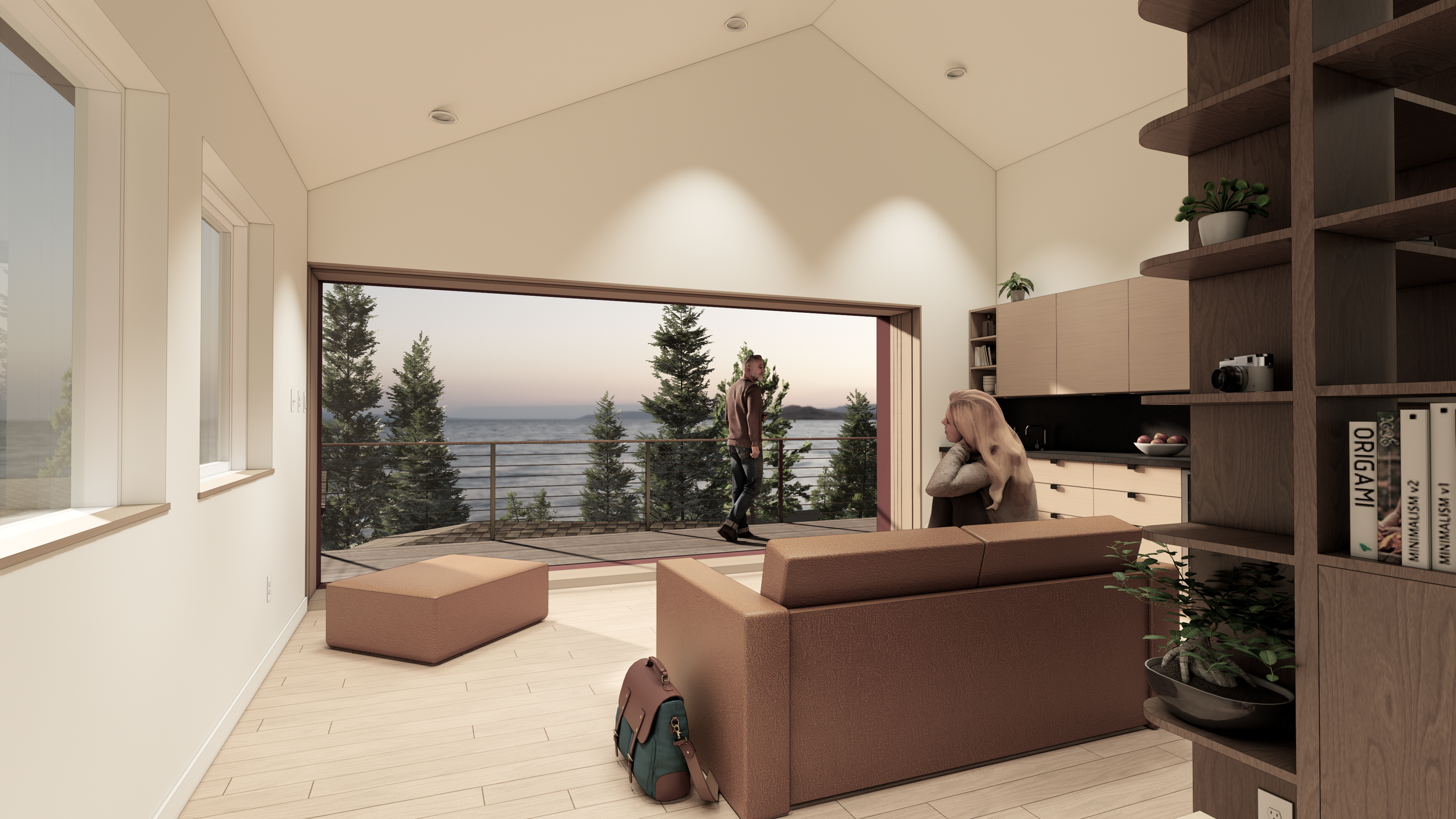
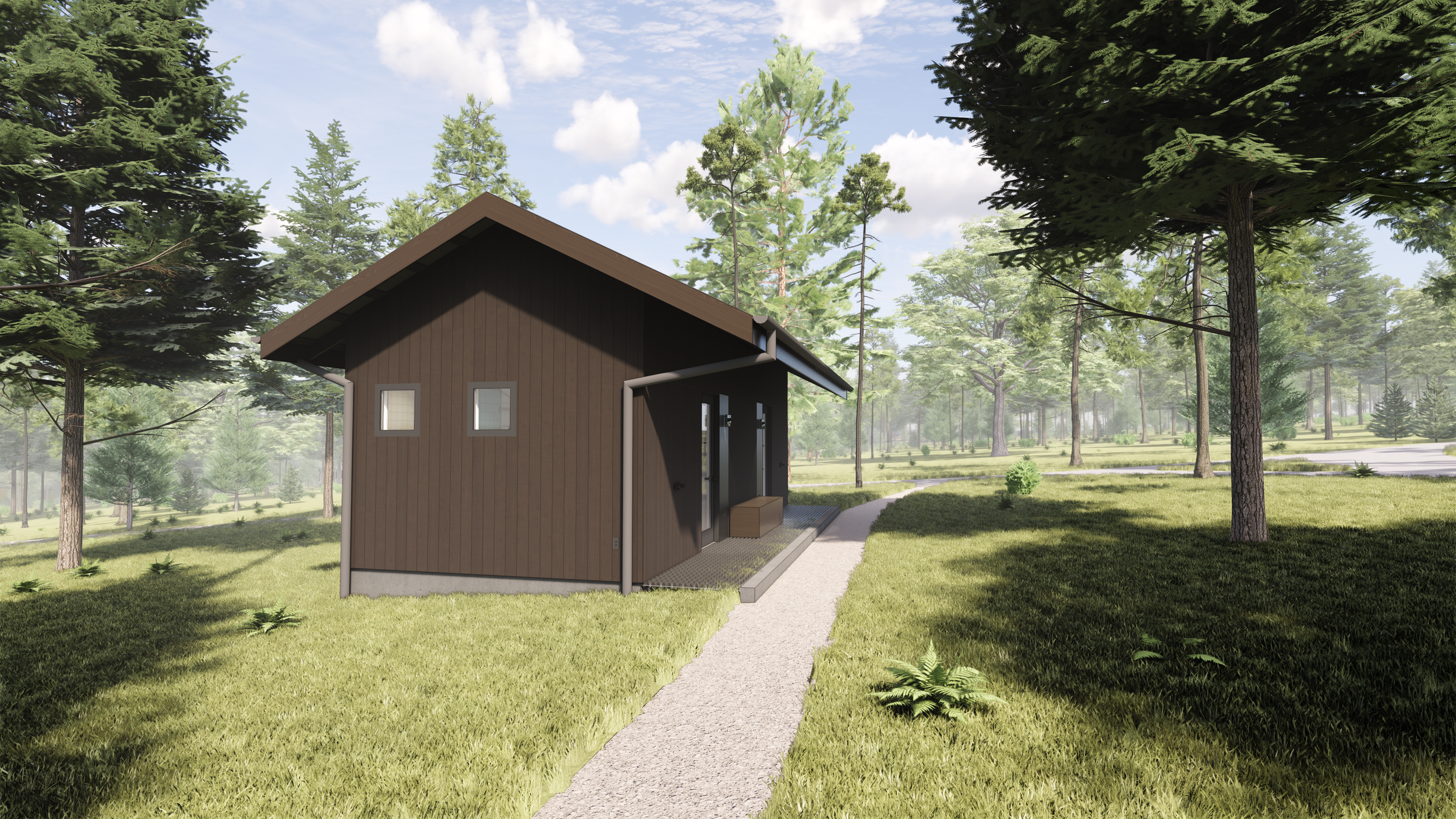
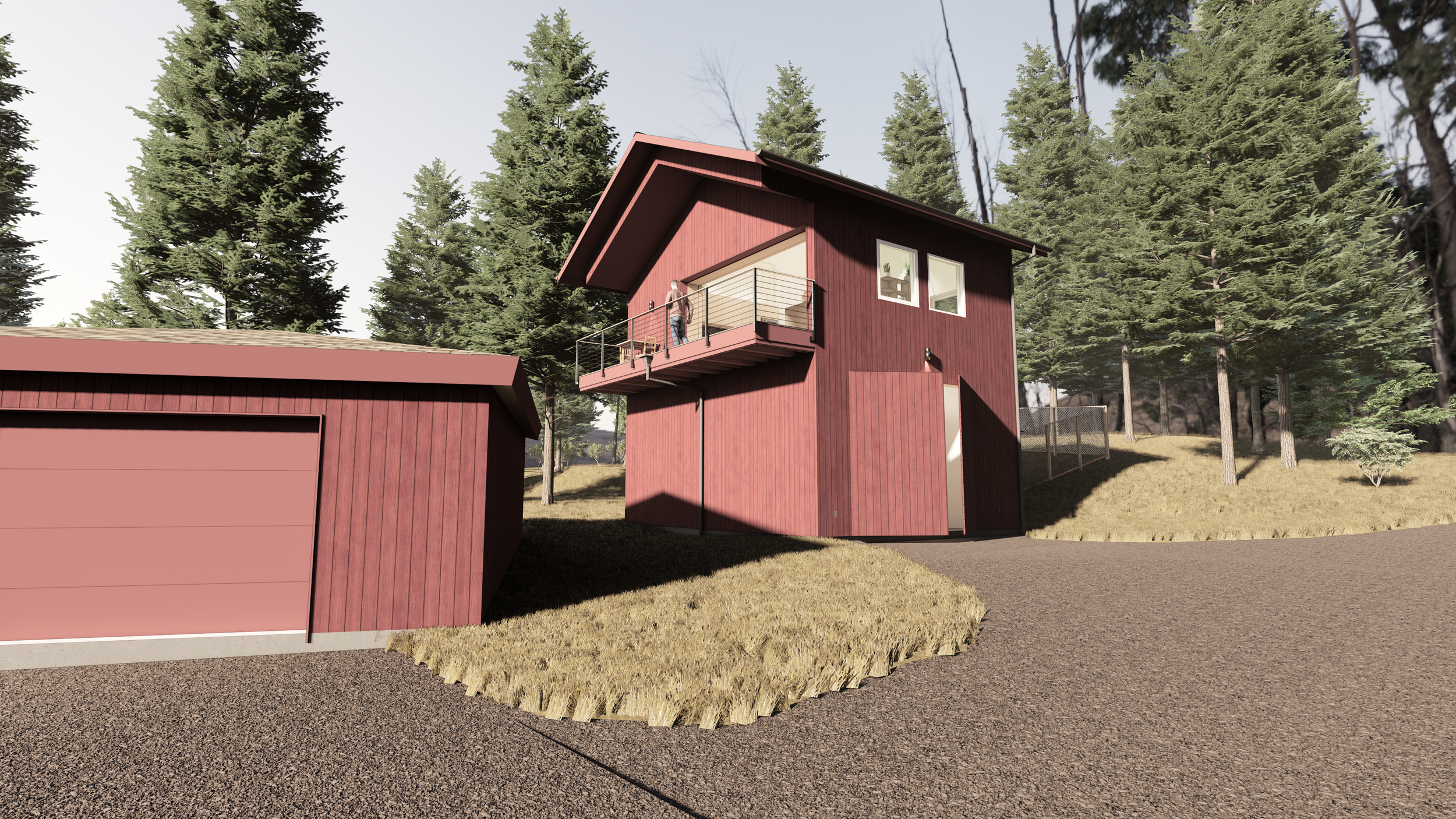
Outtakes from projects in development today; a set of restrooms to support staff and visitors at a farm, a local food center, home additions, and new builds.
Click to move through the images.
Looking back on 2025
Finished work, work underway, and other updates
Completed work
This year, we were fortunate to work with a wide range of public and private clients to help bring their projects to life. The work has been a reflection of our commitment to contributing to meaningful architecture and community-focused projects. We’re grateful to our clients and collaborators for making this year possible.
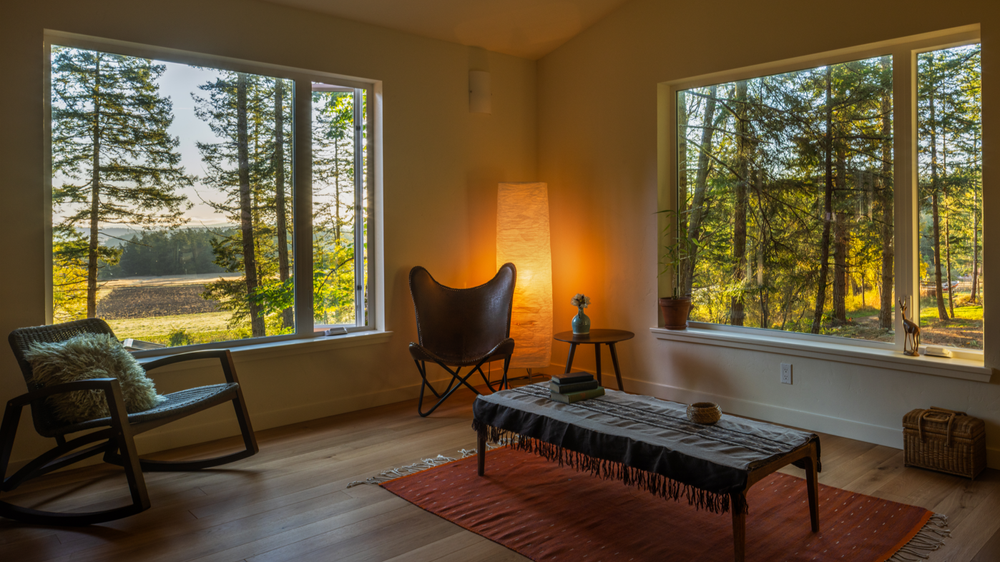
Construction finished on the LCLT Forest House, designed in collaboration with the Lopez Community Land Trust to provide affordable housing to temporary or transitioning Lopez residents working in the local food system.
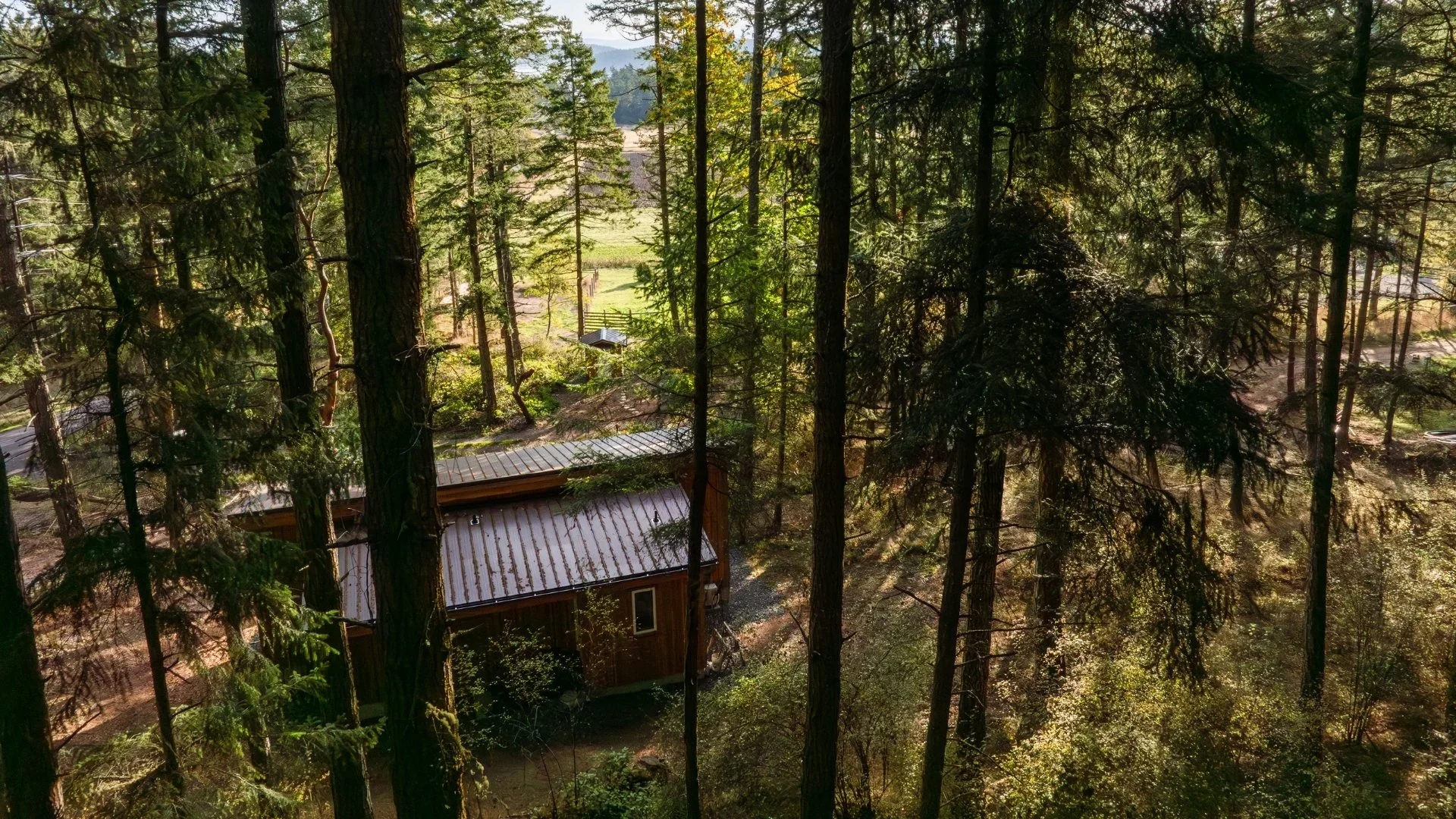
LCLT Forest House
Click to see more of the project.
Underway
Work continues on a range of projects now in design and construction, moving steadily from concept to construction.
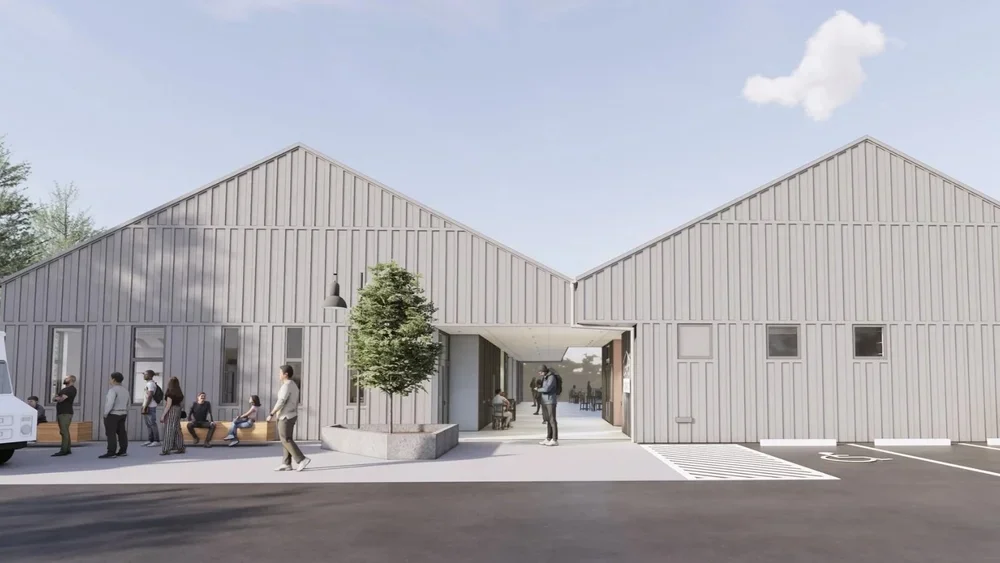
At the Lopez Food Center, permitting has been approved, and construction is set to kick off in the spring. We can’t wait to see this step towards food security for all Lopezians take shape.
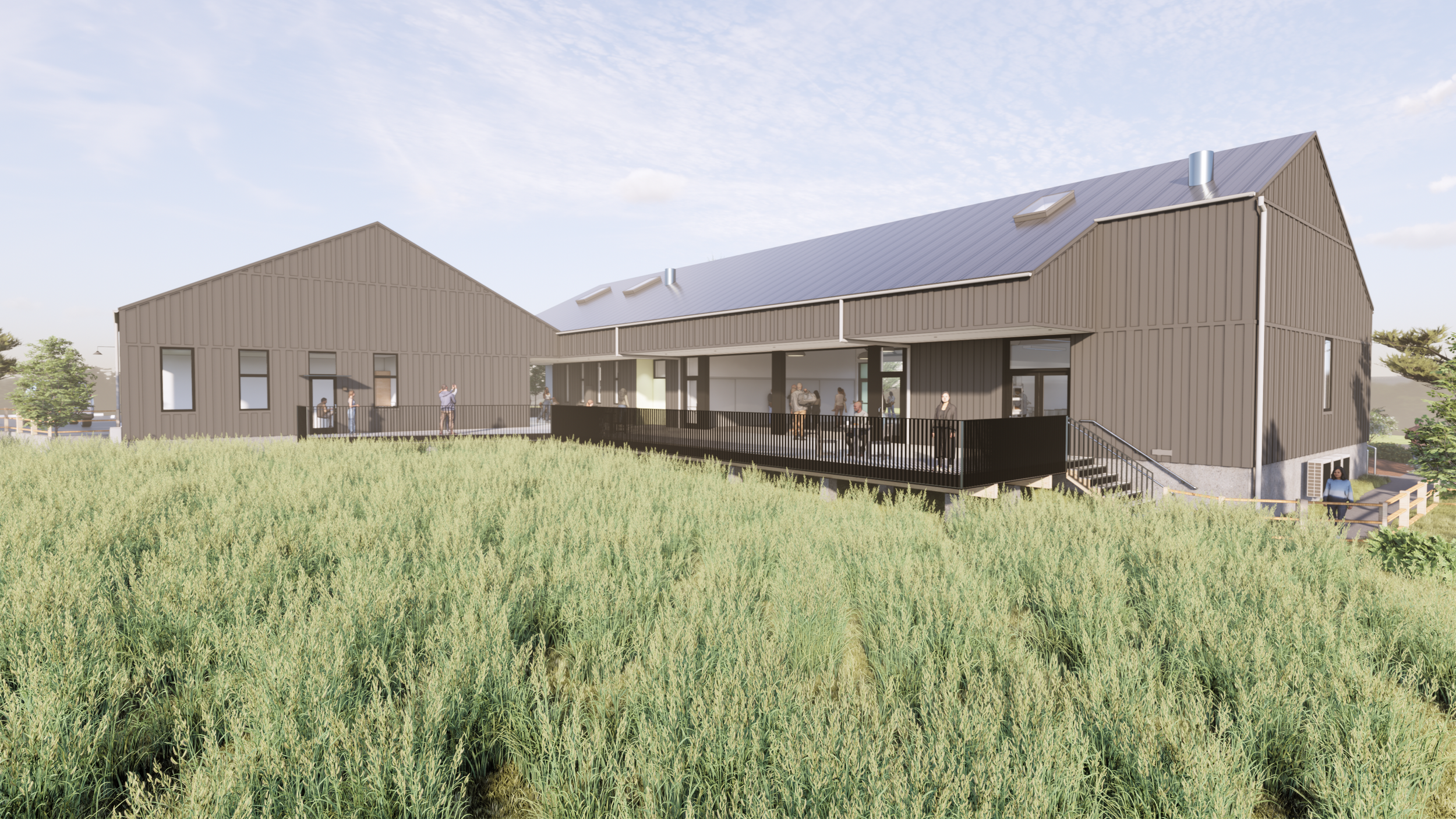
Lopez Food Center
Click to see more of the project.
Recognition
We’re grateful our work was highlighted in local and national press this year, and to have received recognition for our contribution to design in Washington State.
Our Bladderwrack Cabin was featured in Dwell Magazine, telling the story of these homeowner’s passion for the outdoors and big move up from LA to Lopez.
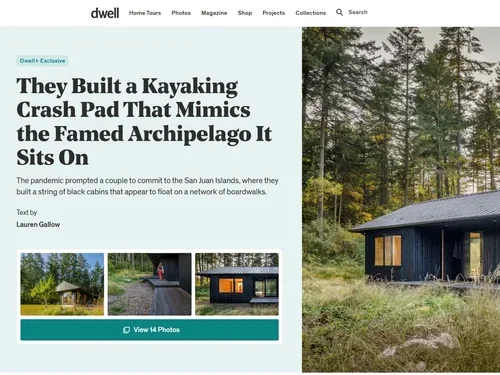
Dwell Magazine
Click here to see the piece.
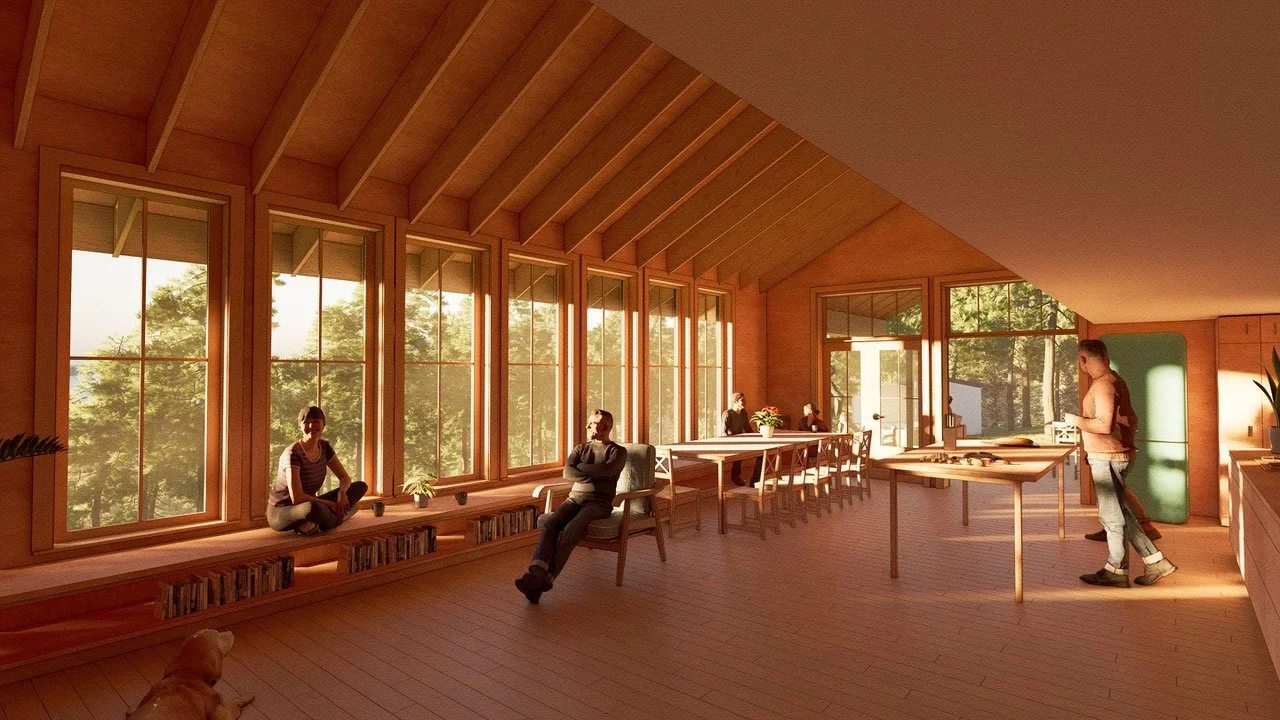
At Camp Nor’Wester, Henderson Commons finished construction as well, adding much-needed amenity space to the outer island camp.
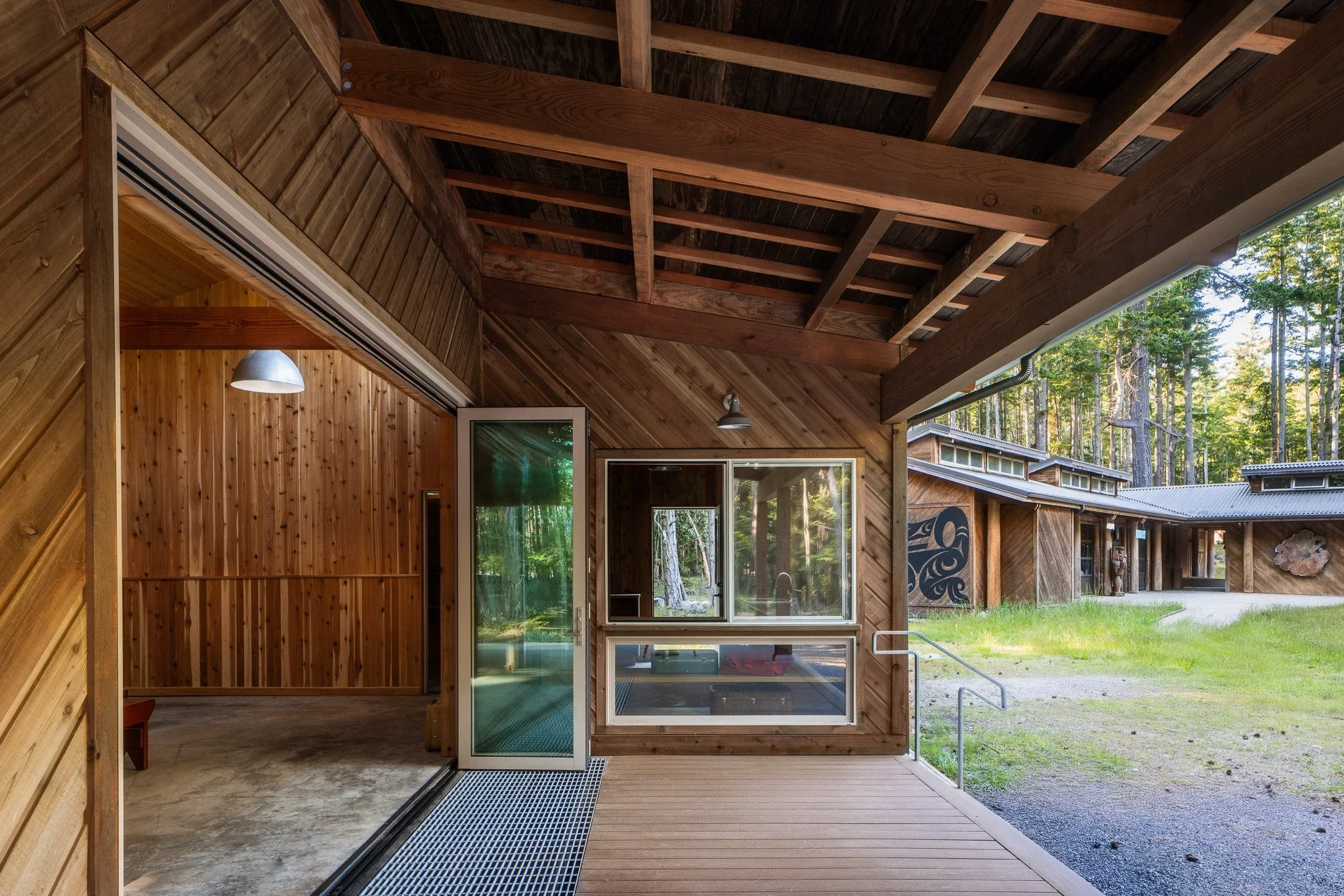
Henderson Commons at Camp Nor’Wester
Click to see more of the project.
On Orcas Island, Juniper Studio extends an existing residence with a garage and a flexible studio.
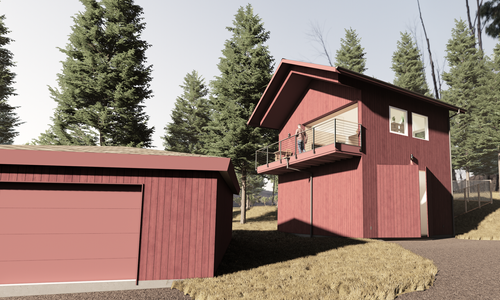
Juniper Studio
Click to see more of the project.
In ARCADE Magazine, UW student Graycie Viscon interviewed Ets Principal Nitsan Yomtov about our work with the Lopez Community Land Trust.
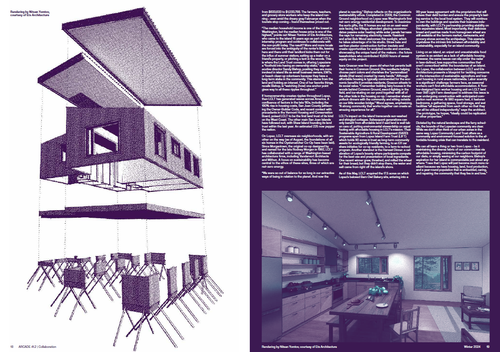
ARCADE Magazine
Click here to see the piece.
We completed the Cherry Tree Residence, a simple and efficient cabin designed to achieve net-zero energy performance.
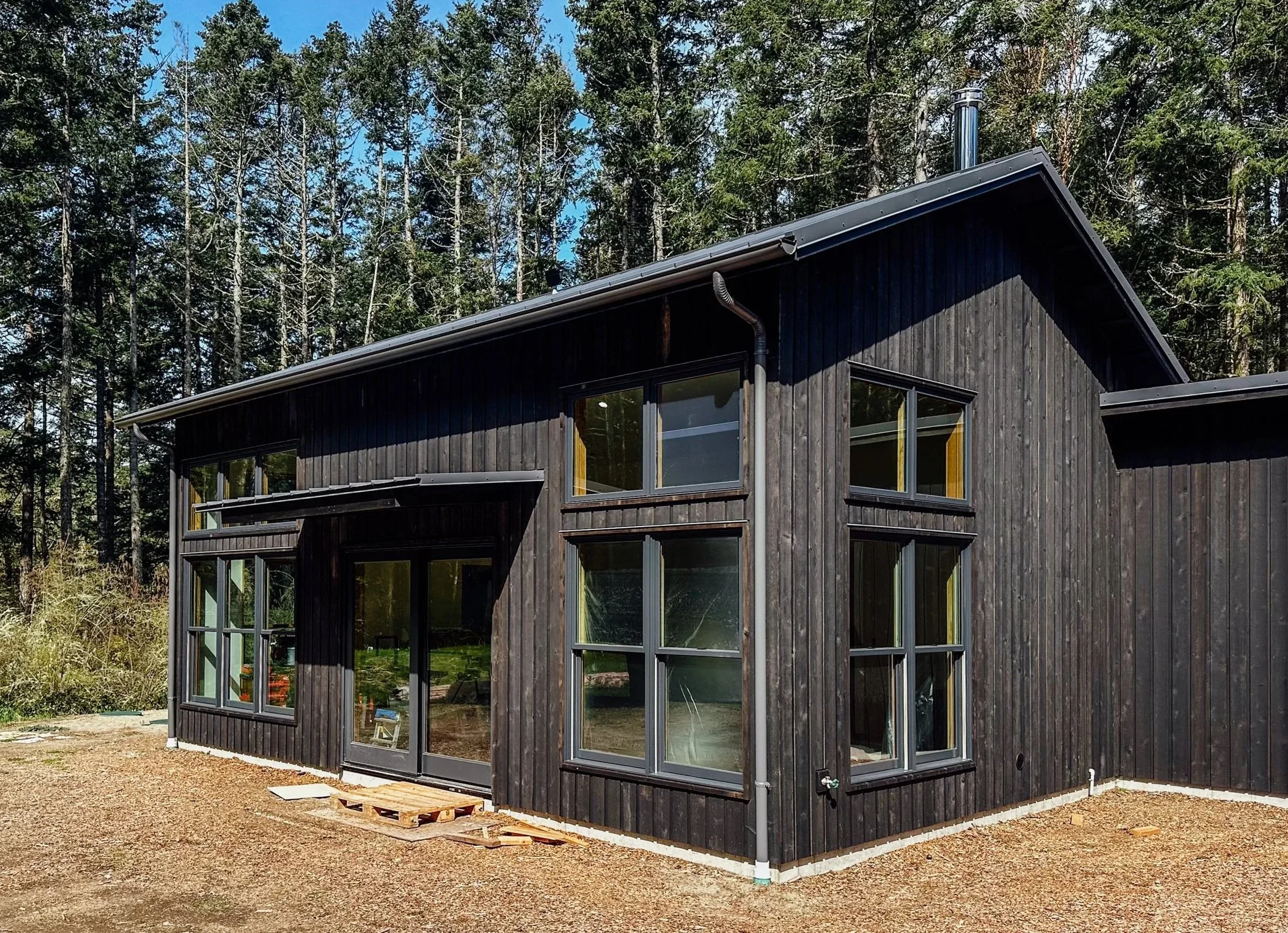
Cherry Tree Residence
Click to see more of the project.
We’re also designing a Basecamp composed of several structures that together create a highly flexible living environment for a family.
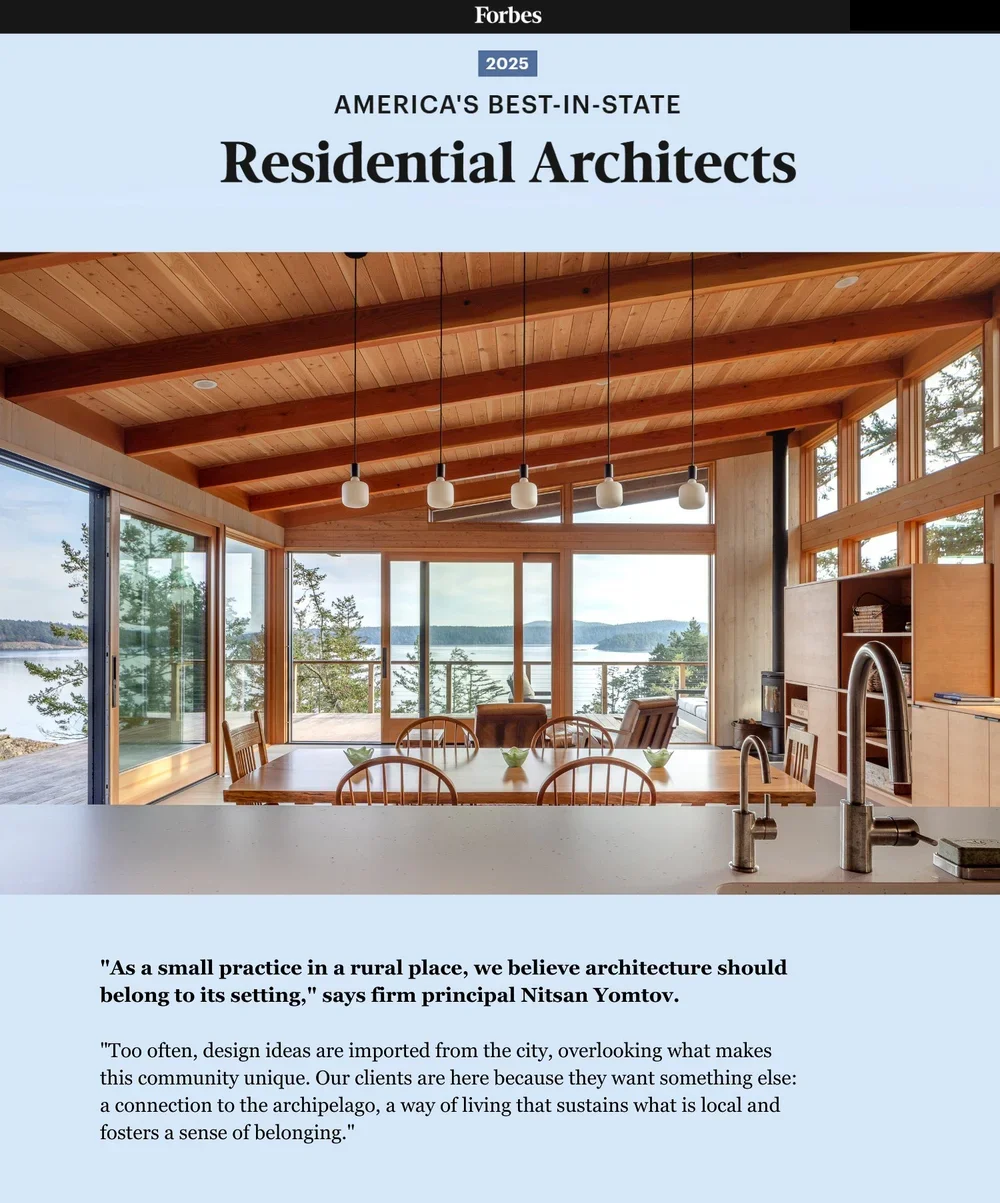
Forbes reviewed more than 20,000 firms nationwide, and included Ets in its roundup of the Best Residential Architects of Washington State.
Forbes’ Best-In-State Residential Architects
Click here to read more.
Plus, in our role as Construction Consultants, we worked with Housing Lopez to facilitate the creation of long-term, affordable housing that helps islanders remain in the community.
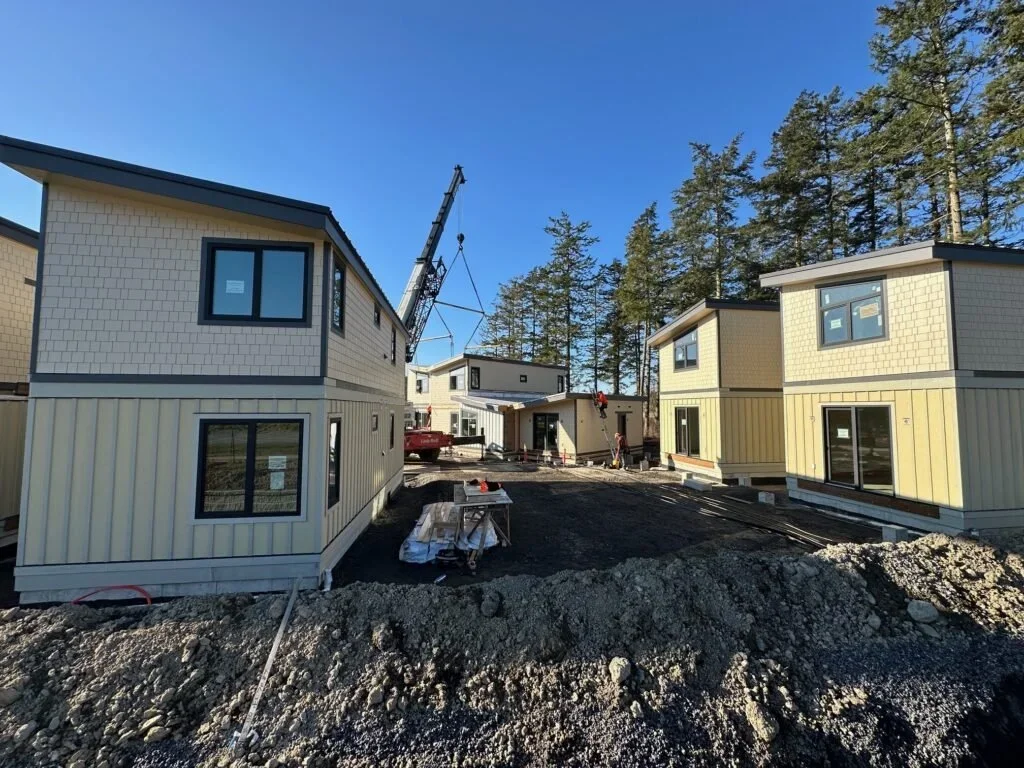
Housing Lopez
Click to see more of the project.
The Mud Flat Home is entering construction in 2026; designed to sit lightly on a stretch of land shaped by wetlands, shoreline regulations, and a narrow slope down to the water.
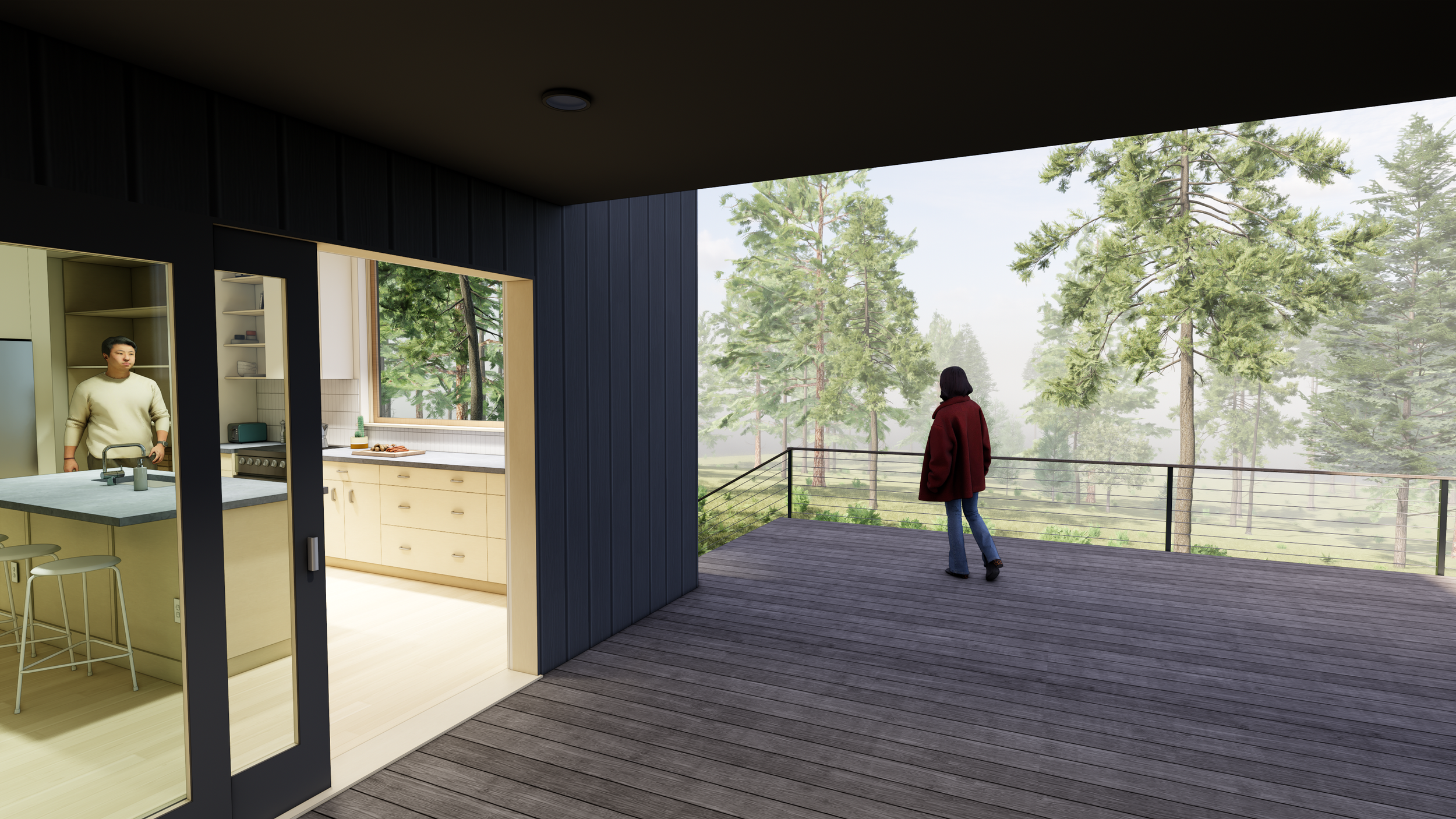
Mud Flat Home
Click to see more of the project.
We’re excited to be among the first select U.S. firms invited to be included on ArchiPro, a design platform connecting architects and homeowners. ArchiPro is expected to go live early next year.
ArchiPro
Click here to see our profile.
For even more updates on our work, consider following us on Instagram.
Recognition from Forbes Magazine
We’re honored to share that Ets has been included in Forbes’ inaugural America’s Best-In-State Residential Architects!
Forbes reviewed more than 20,000 firms nationwide, evaluating design excellence, regional relevance, and built work through a rigorous three-tiered system. We’re grateful for the trust and collaboration of our clients, consultants, and builders, sharing with us in this recognition.
The editors at Forbes also interviewed Ets Principal Nitsan Yomtov, to ask about his perspective as a practitioner in the San Juan Islands, in addition to a dozen firm-leaders nationally.